Heartleaf Philodendron Care Guide
Heartleaf Philodendron care is easy: place it in low to bright, indirect light, water when the top inch or two of soil is dry, and keep it between 65 and 80°F. Feed monthly in spring and summer. It is toxic to cats and dogs, so hang it or set it on a high shelf.
About Heartleaf Philodendron
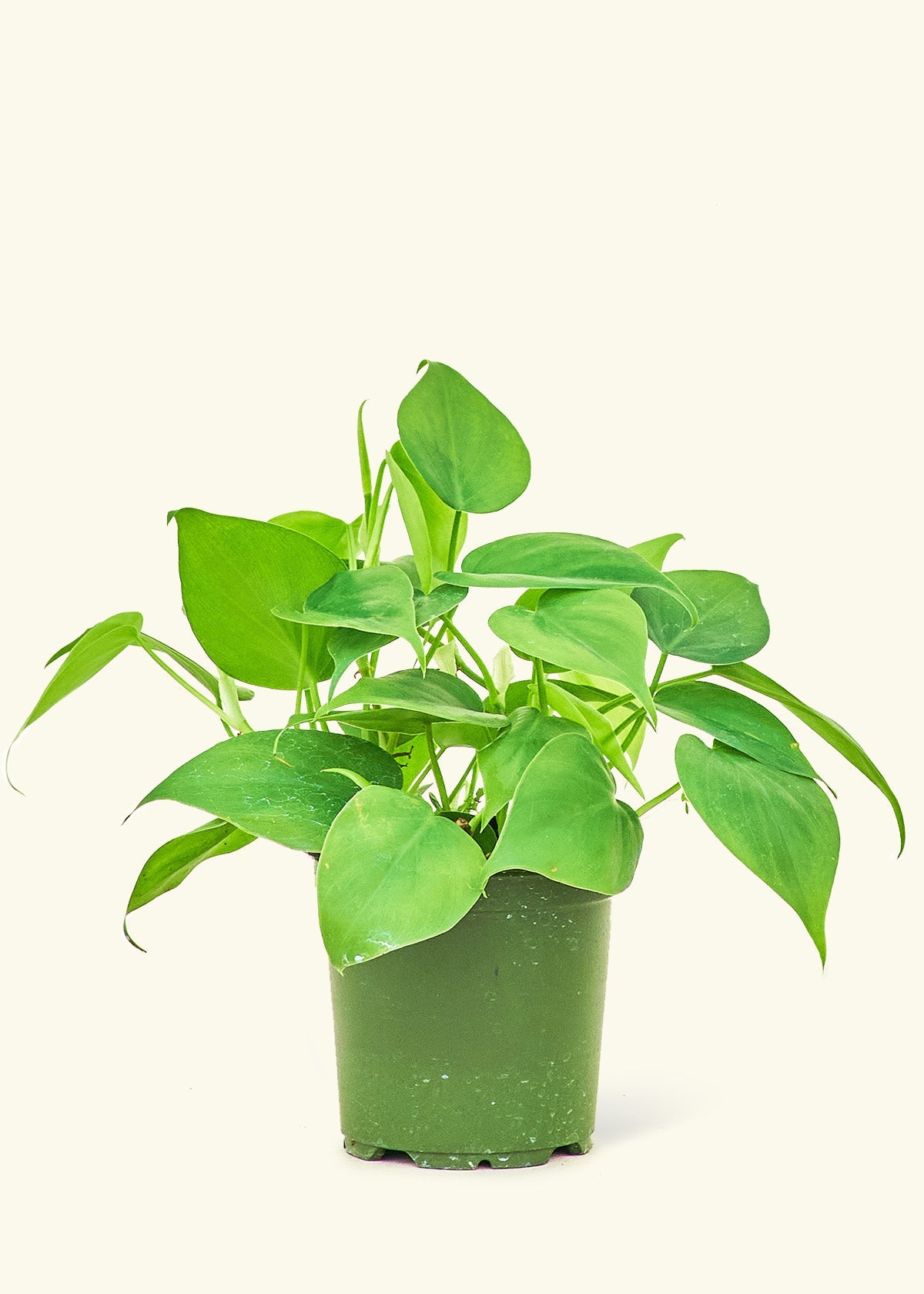
The Heartleaf Philodendron (Philodendron hederaceum) is a popular houseplant with trailing vines and heart-shaped green leaves. Native to the rainforests of the Caribbean and South America, it thrives in warm and humid climates (hardiness zones 10 to 12). If grown outdoors in a pot, make sure you bring it indoors when the temperatures start to drop.
Caring for Philodendron hederaceum is not hard if you meet its watering and light needs. It’s a pretty adaptable plant, and once established, it will reward you with its vivid green foliage for years. Note that this plant is toxic to cats and dogs, so keep it out of reach of your pets on a high shelf or in a hanging basket.
Symbolizing love and abundance, this Philodendron variety makes a thoughtful gift for special occasions.
Interested in other beautiful plants from the same species? Consider the rare and sought-after Philodendron Florida Bronze, or the stunning Velvet Leaf Philodendron.
Heartleaf Philodendron: Benefits
- An elegant cascading plant for hanging planters
- Fast-growing and easy-to-care-for houseplant
- Perfect to gift on romantic occasions
- An air-purifying plant that cleanses indoor air
- Adds exotic vibes to any living space
Heart Leaf Philodendron Care: Growing Tips
Philodendron hederaceum is a relatively easy-going plant. This gorgeous vine doesn’t require much attention and adapts to various conditions.
Philodendron Heartleaf: Light Requirements & Temperature
- Light: Philodendron light requirements apply to this heart-shaped leaf variety, too. Provide bright, indirect light for optimal growth and vibrant foliage.
- Temperature: This tropical beauty grows best in temperatures that range between 65°F and 80°F. Protect it from cold drafts.
Philodendron Heartleaf: Watering & Humidity
- Watering: Water your Heart Leaf Philodendron consistently and deeply when the topsoil feels dry. Use overnight or filtered water.
- Humidity: This plant adapts well to regular indoor humidity but thrives in its natural environment with air moisture levels between 50 and 70%.
Heart-leaf Philodendron: Soil, Fertilizer, and Repotting
- Soil: Use a well-draining, nutrient-rich potting mix with added bark or perlite to ensure your Heartleaf Philodendron grows healthy.
- Fertilizer: Feed your Philodendron monthly with a balanced fertilizer diluted to half strength in spring and summer.
- Repotting: Repot these fast-growing plants once every 2 years; use only a slightly larger pot to prevent waterlogged soil.
Heartleaf Philodendron: Propagation
Heartleaf Philodendron propagation is pretty straightforward and is best achieved with healthy cuttings. Cut a stem below a leaf node and place it in a glass or a jar with water (change the water weekly for best results). When the roots form and grow a couple of inches long, it’s time to plant the baby Philodendrons in fresh soil. You can also divide a mature plant in the springtime, during repotting, and multiply it this way.
Heartleaf Philodendron: Problems and Pruning
Common problems with this houseplant are often caused by an incorrect care routine. If you notice that your Philodendron leaves are turning yellow, this usually means that you’re giving it too much water. Brown leaf tips signal overexposure to light or underwatering. Trim any damaged leaves to ensure your Philodendron hederaceum looks healthy and lush. In the spring, you can trim its long vines to achieve a bushier look and tidier shape.
Heartleaf: Companion Plants & Placement Options
The popular Philodendron Heartleaf is ideal for filling vertical spaces, as it’s a natural trailing plant that adds elegance and a jungle feel to any room. Whether growing it at home or in the office, its vibrant foliage and easy-care nature make it a must-have addition to your space.
Great to Place on
Being a popular trailing houseplant, the Heartleaf Philodendron will sit perfectly on an elevated shelf with its cascading vines and lush heart-shaped leaves. Or display it in a hanging planter in the entry hall or bathroom. Its air-purifying properties make it a great plant for the bedroom, too.
Philodendron Heartleaf Grows Well With
Pair your Heartleaf Philodendron with other tropicals and hanging plants:
- Golden Pothos: The Golden Pothos (Epipremnum aureum) is a tough, low-maintenance house plant, popular for its green-and-yellow leaf variegation.
- Stromanthe Triostar: Add the colorful Stromanthe Triostar (Stromanthe sanguinea) to your plant collection for a beautiful contrast and exotic vibes.
- Alocasia Regal Shields: With its large leaves, the Alocasia Regal Shields (Alocasia odora x reginula) brings a fresh green touch to any living space.
Get Heartleaf Philodendron for Sale From Hey Rooted Now!
Choose Small (about 7 inches tall in a 4-inch pot) or Medium (about 10 inches tall in a 6-inch pot), in a grow pot or a Classic planter in Polar White, Rose Pink, Charcoal, or Oat. Every Heartleaf Philodendron is covered by our 30 Day Happiness Guarantee.
Heartleaf Philodendron FAQs
What's the difference between a heartleaf philodendron and a pothos?
They look alike but differ up close. Heartleaf philodendron leaves are thinner, softer, and more heart-shaped, and new leaves unfurl from a thin sheath called a cataphyll. Pothos leaves are thicker and waxier, with a groove along the leaf stem. Care is very similar.
Can heartleaf philodendron grow in low light?
Yes. It's one of the best trailing plants for lower light. Growth slows and leaves come in smaller and farther apart, so if the vines look sparse, move it closer to a bright window.
Is heartleaf philodendron toxic to cats and dogs?
Yes. Like all philodendrons, it contains calcium oxalate crystals. Chewing the leaves can cause mouth pain, drooling, and vomiting in cats and dogs.
Is Philodendron hederaceum the same as Philodendron cordatum?
In stores, usually yes. Philodendron cordatum is a common trade name for the heartleaf philodendron, which botanists classify as Philodendron hederaceum. True P. cordatum is a separate, less common species from Brazil.
How fast does a heartleaf philodendron grow?
In bright, indirect light and warm temperatures, vines can add several inches a month in spring and summer. Growth slows in winter and in lower light.
How do you make a heartleaf philodendron fuller?
Trim long vines just above a leaf node to make them branch, then root the cuttings and plant them back in the same pot. More light also gives denser growth.




 Care level: No sweat
 Light: No direct sun
 Not pet friendly
 Water: Once a week


