Pinstripe Calathea Care Guide
About Calathea Pinstripe
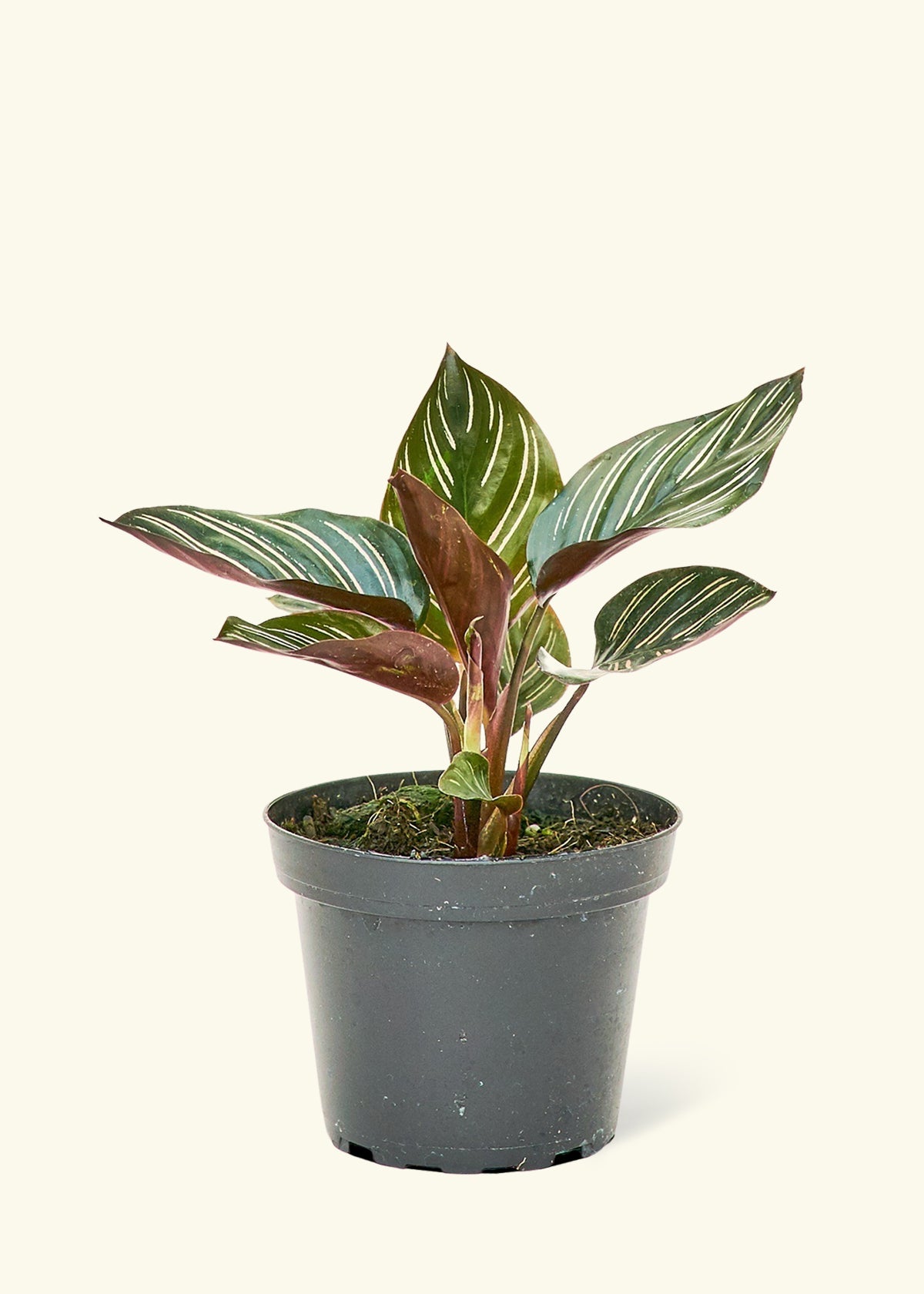
Calathea Pinstripe (Calathea ornata) is a rare tropical plant with dark green leaves and fine pink lines that look almost painted on. Also called Pinstripe prayer plant, this elegant houseplant brings soft color and pattern to shelves, desks, and bright indoor corners.
The calathea ornata plant comes from the warm, humid forests of South America. It grows best outdoors in USDA Zones 10 to 12, but most people enjoy the Calathea Pinstripe plants indoors.
Like many plants in the Calathea collection, this plant requires moderate care: it prefers steady moisture, warm temperatures, and higher humidity. It’s considered pet-friendly and non-toxic to cats and dogs. Like other prayer plants, its leaves can move with the light, lifting and lowering between day and night. Calathea symbolism is often linked with renewal, focus, and fresh starts.
Other stunning and sought-after Calathea varieties include Calathea Rattlesnake and Calathea Dottie.
Calathea Plant: Benefits
- Its rich color and fine leaf pattern create visual interest
- Safe if you have cats or dogs in your home
- Brings a soft, tropical feel
- Good companion for other humidity-loving plants
- Thoughtful gift for lovers of foliage plants
Calathea Ornata Care: Growing Tips
Caring for your calathea ornata is easy if you can keep growing conditions steady. Pinstripe plant care mostly comes down to filtered light, even moisture, warm temperatures, and humidity.
Calathea Pinstripe: Light Requirements & Temperature
- Light: Provide your Calathea Pinstripe with bright, indirect light. Avoid direct sunlight, as it can bleach the pink markings or scorch the leaves, turning them brown.
- Temperature: Keep your Pinstripe Calathea in a warm room between 65°F and 80°F. Keep it from drafts, air vents, heaters, and sudden temperature changes.
Pinstripe Calathea: Watering & Humidity
- Watering: Water when the top inch of soil feels dry and use only filtered, distilled, or rainwater as the Calathea ornata plant can be sensitive to minerals in tap water.
- Humidity: To keep the foliage looking fresh, use a humidifier, pebble tray, or group with similar plants.
Calathea Pinstripe: Soil, Fertilizer, and Repotting
- Soil: Use a loose, well-draining potting mix such as a tropical houseplant mix with added perlite or orchid bark to help prevent soggy soil.
- Fertilizer: Feed monthly in spring and summer with diluted liquid houseplant fertilizer. Don’t fertilize during the fall and winter months.
- Repotting: Repot every one to two years or when roots fill the pot. Move it into a slightly larger container.
Calathea Pinstripe: Propagation
Propagate the Calathea ornata plant by division during repotting. Gently separate a rooted clump, pot it in fresh soil, and keep it warm, humid, and evenly moist while it settles.
Pinstripe Plant: Common Problems
The Pinstripe plant may develop curling leaves, brown tips, yellow leaves, or faded markings if conditions are off. Remove any damaged leaves using sterile scissors. Low humidity, direct sun, irregular watering, cold drafts, or mineral-heavy water are common causes.
Calathea Pinstripe: Companion Plants & Placement Options
Pair your Calathea Pink Pinstripe plant with others that prefer soft light and consistent moisture. Grouping with similar plants will also boost humidity levels.
Great to Place on
Great spots for your Calathea ornata include a desk, dresser, plant stand, shelf, or side table. It also works well in bright bathrooms, bedrooms, and living rooms away from direct sunlight.
Calathea Ornata Pinstripe Grows Well With
Pair your Calathea ornata Pinstripe with plants that enjoy warm rooms and indirect light.
Shop for Calathea Pinstripe at Hey Rooted Today!




 Care level: Extra love
 Light: No direct sun
 Pet friendly
 Water: Once a week


