Calathea Dottie Care Guide
About Calathea Dottie
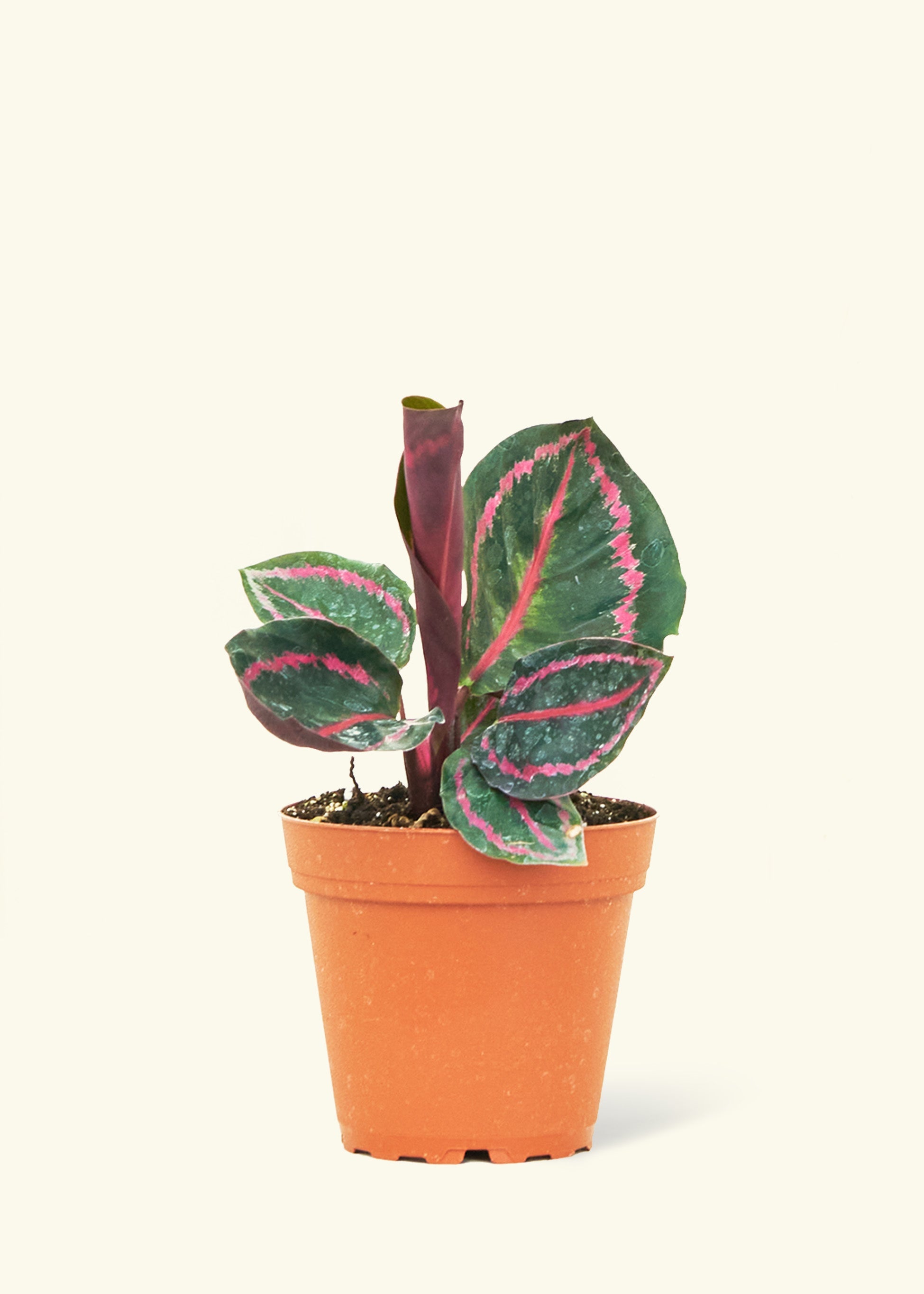
The Calathea Dottie (Calathea roseopicta ‘Dottie’) is a striking tropical plant known for its deep purplish-black leaves outlined with vivid pink markings. As one of the boldest varieties of Calathea roseopicta, this plant easily becomes a focal point in any indoor green display. Native to the tropical rainforests of South America, the Dottie Calathea grows in warm, humid understories where it receives gentle, filtered light. It thrives in USDA hardiness zones 10-12 and performs beautifully as a houseplant in cooler regions.
Like other calatheas, it’s often called a “prayer plant” because its leaves open during the day and fold upward at night in a rhythmic movement known as nyctinasty. Calathea Dottie is considered moderate to care for, making it a suitable choice for plant parents who enjoy more hands-on tending. It is also pet-friendly, offering a safe option for homes with cats or dogs.
Calathea Plant: Benefits
- Adds bold tropical color to indoor spaces
- Safe for pets and households with children
- Naturally improves humidity as it releases moisture
- Creates a calming atmosphere with its leaf movement
- Helps purify the air, removing toxins
Calathea Roseopicta Care: Growing Tips
Calathea roseopicta care requires consistency, soft water, and a stable environment. With the proper humidity, light, and watering routine, this beautiful plant will reward you with vibrant foliage year-round.
Calathea Dottie: Light Requirements & Temperature
- Light: Provide bright, indirect light to maintain your prayer plant’s foliage colors. Avoid direct sun, which can fade the pink veining and scorch the foliage. Low light is tolerated but may lead to slower growth.
- Temperature: Keep the plant in a warm environment between 65 and 80°F. Protect it from drafts, sudden temperature drops, and air vents, as Calathea Dottie is sensitive to cold, dry air.
Calathea Dottie: Watering & Humidity
- Watering: Use distilled or filtered water to prevent brown edges caused by minerals in tap water. Keep the soil lightly moist but never soggy, allowing the top inch to dry between waterings.
- Humidity: High humidity (60% or higher) keeps the leaves lush and healthy. A humidifier, pebble tray, or grouping of plants can help maintain the moisture level this tropical plant prefers.
Dottie Calathea: Soil, Fertilizer, and Repotting
- Soil: Choose a light, airy mix that drains well, such as peat, perlite, and pine bark, to prevent excess moisture from sitting around the roots.
- Fertilizer: Feed every month during spring and summer with a diluted, balanced liquid fertilizer. Avoid overfeeding, which may cause leaf burn.
- Repotting: Repot every 1-2 years in early spring, moving the plant to a pot one size up. This refreshes the soil and supports steady growth.
Calathea Dottie: Propagation
Propagation is best done through division. Gently remove the plant from its pot and separate sections with their own roots and stems. Place each division in fresh soil, keep it warm and humid, and avoid direct sunlight while the new plants establish themselves.
Calathea Roseopicta Dottie: Common Problems
Calatheas can experience curling leaves, browning edges, or fading color from low humidity, hard water, or too much light. Pests like spider mites may appear in dry environments. Trim damaged leaves with clean scissors to maintain the plant’s appearance and encourage healthy growth.
Calathea Dottie: Companion Plants & Placement Options
Calathea Dottie pairs well with other humidity-loving plants and adds depth to moderately low-light corners.
Great to Place on
Display these air-purifying beauties on bedside tables, bookshelves, or plant stands where their dramatic foliage can stand out. Bathrooms, kitchens, or other naturally humid rooms are excellent choices.
Calathea Dottie Grows Well With
- Red Prayer Plant: The Red Prayer Plant pairs beautifully with Calathea Dottie, as it boasts similar foliage movement and vibrant leaf patterns.
- Calathea Plants: Explore more Calathea varieties with complementary textures and colors.
- Peperomia Plants: Peperomia Plants are compact plants that enjoy similar humidity levels without overwhelming space.
Shop for Calathea Dottie at Hey Rooted Today!



 Care level: Extra love
 Light: No direct sun
 Pet friendly
 Water: Once a week


