Watermelon Peperomia Care Guide
About Watermelon Peperomia
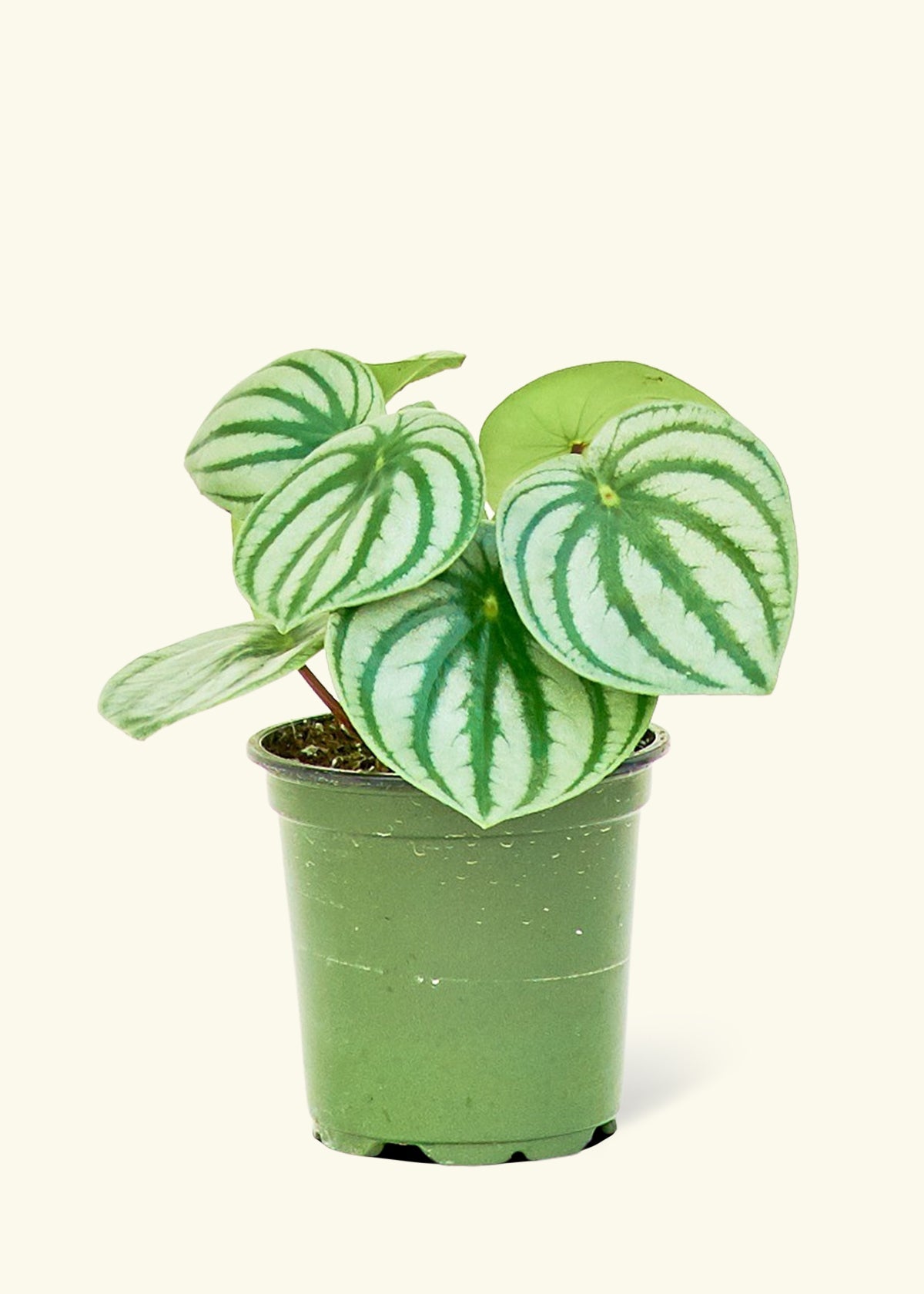
Watermelon Peperomia (Peperomia argyreia) gets its nickname from its round, striped leaves, which look a little like tiny watermelon rinds. The silver and green pattern gives this plant a fresh, playful look without needing flowers.
The Watermelon Peperomia plant comes from the warm, tropical regions of South America and grows outdoors in USDA Zones 10 to 12. Indoors, it stays compact and easy to manage.
Even though it’s considered a rare plant, care is usually simple if you avoid overwatering. It likes bright filtered light, light soil, and gentle warmth. It’s pet-friendly and non-toxic to cats and dogs. In plant symbolism, Peperomia is often linked with friendship, good luck, and cheerful energy. Other popular Peperomia plant varieties include Peperomia Rosso, Baby Rubber Plant, and its variegated version.
Watermelon Peperomia: Benefits
- Stays neat and compact in smaller spaces
- Striped leaves give it a fresh, playful look
- Safe choice for homes with cats and dogs
- A perfect bedroom plant with air-purifying benefits
- Easy to style on desks, shelves, counters, and nightstands
Peperomia Watermelon Care: Growing Tips
Learning how to care for Watermelon Peperomia mostly comes down to not overdoing things. It likes a bright spot, gentle warmth, and soil that can breathe between waterings.
Watermelon Peperomia: Light Requirements & Temperature
- Light: Choose a spot that’s bright but not in direct sun, as this will leave pale marks. Not enough light will blur the striped pattern.
- Temperature: Aim for a constant temperature of between 65°F and 80°F. Keep it away from cold windowsills, doors, or vents.
Peperomia Watermelon: Watering & Humidity
- Watering: Wait until the top of the soil is dry to the touch and then water it lightly. Always let the pot drain away any excess water.
- Humidity: Peperomia Watermelon copes well with normal room humidity. However, if your room is particularly dry, position your houseplant away from the heat or the air conditioner.
Peperomia Watermelon: Soil, Fertilizer, and Repotting
- Soil: This plant is not keen on having its roots in heavy, wet soil. Use a light mix with potting soil and perlite, or add a little orchid bark.
- Fertilizer: Feed lightly during spring and summer, about once a month.
- Repotting: Repot only when roots look crowded, or the plant dries out much faster than usual.
Watermelon Peperomia: Propagation
Watermelon Peperomia propagation is usually done with leaf cuttings or division. For leaf cuttings, take a healthy leaf with a short piece of stem, place it in lightly moist soil, and keep it warm in gentle light.
Watermelon Peperomia Plant: Problems and Pruning
Most Watermelon Peperomia plant problems start with incorrect watering. Soft stems, yellow leaves, or drooping can mean the soil is too wet. Crispy edges may point to dry air, harsh sun, or underwatering. Snip off damaged leaves with clean scissors.
Watermelon Peperomia: Companion Plants & Placement Options
Watermelon Peperomia works well with plants that bring height, color, or darker foliage. Its rounded leaves contrast nicely with upright or dramatic tropical plants.
Great to Place on
Place your Watermelon Peperomia plant on a desk, shelf, windowsill, nightstand, coffee table, or small plant stand. A large Watermelon Peperomia can brighten a kitchen counter or office corner with filtered light.
Peperomia Argyreia Watermelon Grows Well With
Pair your Peperomia Argyreia with plants that enjoy similar indoor care.
- Pink Syngonium: The soft pink leaves of the Pink Arrowhead Plant bring color next to the striped foliage of Watermelon Peperomia.
- Alocasia Regal Shields: The bold, dark leaves of Alocasia Regal Shields add drama beside the smaller, rounded Peperomia plant.
- Calathea Pinstripe: The fine pink striping of Calathea Pinstripe pairs beautifully with the silver pattern of Peperomia Watermelon.
Shop for Watermelon Peperomia for Sale at Hey Rooted Now!




 Care level: No sweat
 Light: High
 Pet friendly
 Water: Once a week


