Calatheas Plants: Overview
Meet our beautiful Calathea plants and consider adding refreshing greenery and an aesthetic touch to your home. Calatheas are among the most popular foliage plants, which can bring a lush, tropical note to your plant displays.
Calatheas are also known as Prayer Plants, because their leaves fold in the evening, like hands in prayer. There are numerous types of Calatheas, all of them originating from the rainforests of Central and South America.
These spectacular houseplants are relatively easy to care for but have specific growing requirements to thrive indoors. Calatheas are non-toxic for pets, making them a perfect choice for pet owners. Symbolically, the Calathea Prayer Plant stands for new beginnings, focus, and motivation.
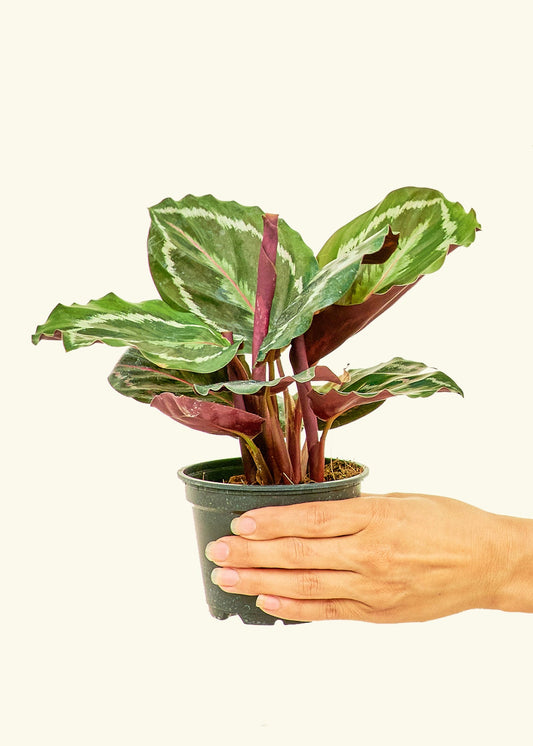
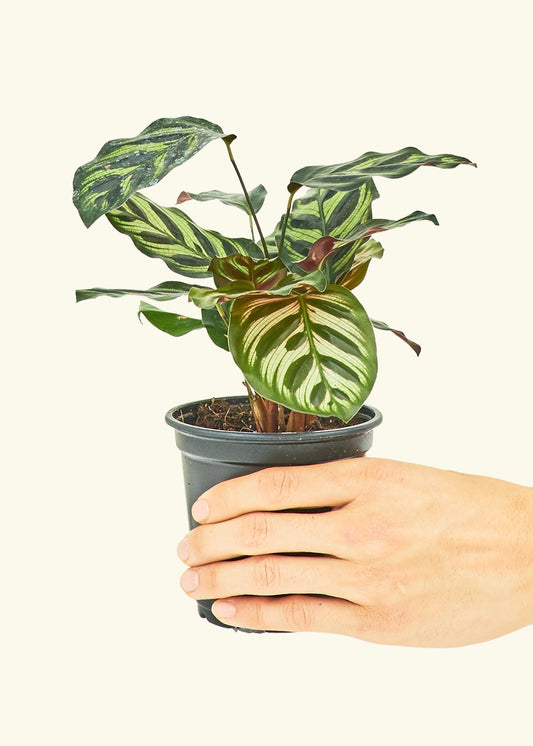
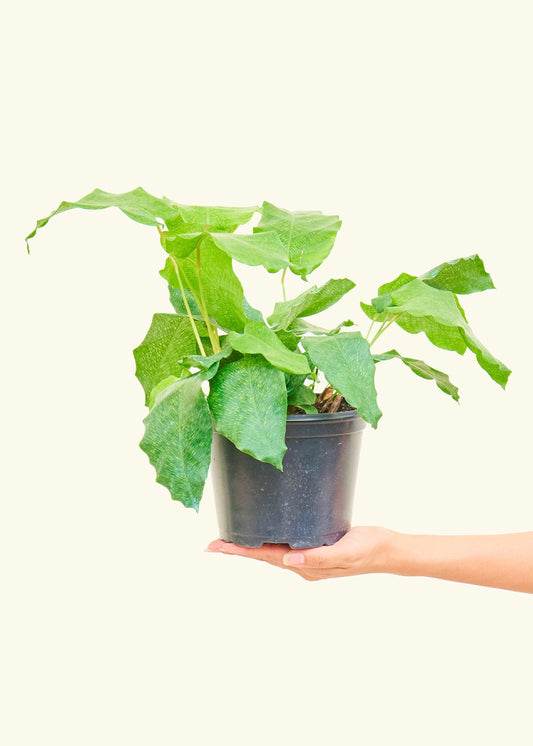
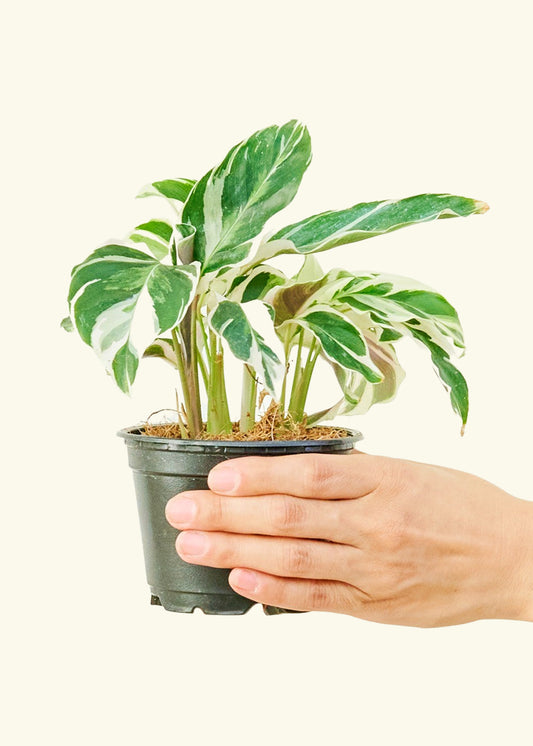
Calathea plants are known for the beautiful patterns on their leaves, including the stunning Calathea Medallion and the popular Peacock Plant.
Calathea Plant Benefits
- Gorgeous patterned foliage
- Cleanses indoor air of toxins
- Pet-friendly
- Calming and stress-relieving effect
- Eye-catching highlight plant
Calathea Care: Growing Guide
Calatheas are not that difficult to grow. With some attention and love, you can make your Calathea plant flourish. Place your green companion in the right spot and maintain high humidity around this beauty.
Watering, Light, Humidity, and Temperature
Water your prayer plant regularly with filtered or ‘overnight’ water, free of chemicals like fluoride and chlorine, which are released after 24h. Let the top layer of the soil dry between waterings. Calathea plants grow best in medium to bright, indirect light. Midday sun rays can scorch the plant’s delicate leaves. Keep the humidity high around these tropical plants. The best temperatures for Calatheas are between 60°F and 75°F. Protect this plant from sudden temperature variations.
Repotting, Soil, and Feeding
Wait for about 6 months before repotting, after you receive your Calathea plant for sale. Use a 2-inch larger pot, and plant your Calathea in well-draining soil; add perlite to improve drainage. Feed your Prayer Plant Calathea with a balanced fertilizer once a month to promote healthy, lush foliage.
Propagation
The easiest way to propagate your Calathea plant is via cuttings. Cut an offshoot from your plant in the spring or early summer and place it in a clear vase filled with water. Place in bright but indirect light and change the water regularly until the roots form. Then transplant your new plant into a suitable pot.
Pruning, Cleaning, and Common Issues
Most Calathea types don’t require regular pruning. Simply remove any dead or damaged leaves. You can also trim the stems to keep your plant in the desired shape. Clean your Calathea plant under a mild shower to remove dust from its leaves.
Always check the plants for pests like spider mites or mealybugs. Yellowing leaves are often a sign of overwatering, while crisp, brown, or curling leaves indicate low humidity or insufficient watering. Calatheas can also develop brown leaf edges as a reaction to chemicals in tap water.
Calathea Varieties: Choose From Our Collection
The amazing variety of colorful Calatheas will bring life and charm to your living space with their bold patterns and unique leaves. Choose from some of the most beautiful foliage plants to add to your plant collection:
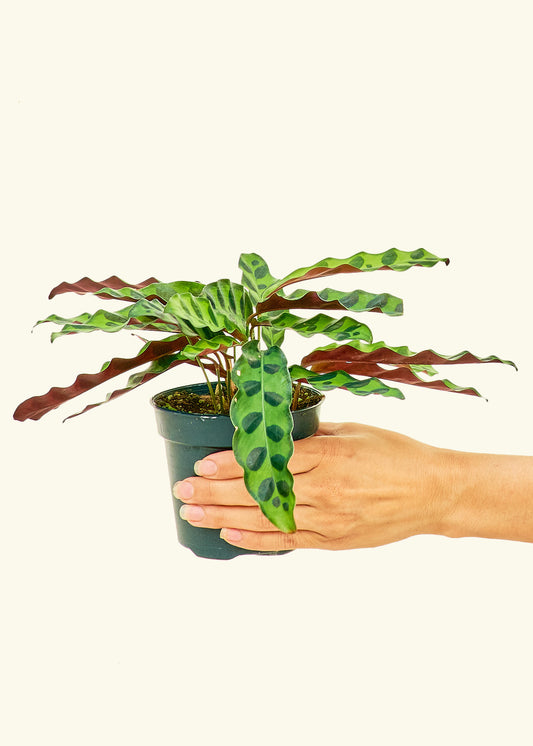
Calathea Rattlesnake
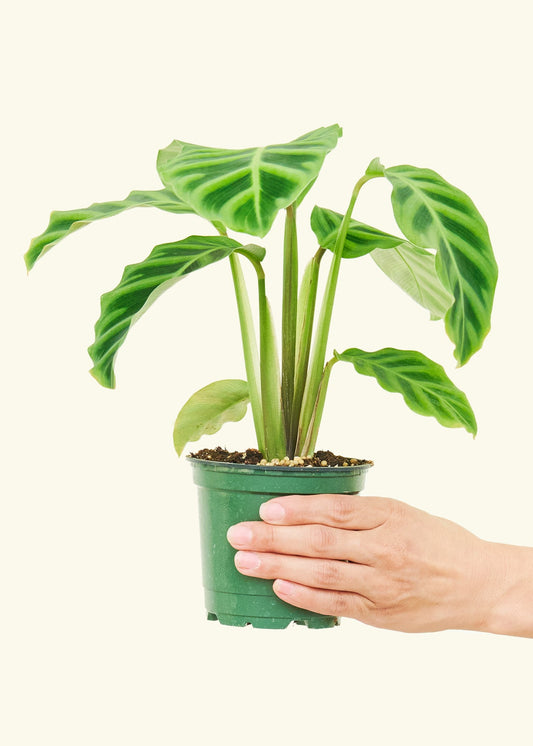
Description: The rare and dramatic Calathea Rattlesnake (Calathea lancifolia) has elongated, wavy leaves with a stunning pattern of dark green markings and is easier to care for than many other Calathea varieties.
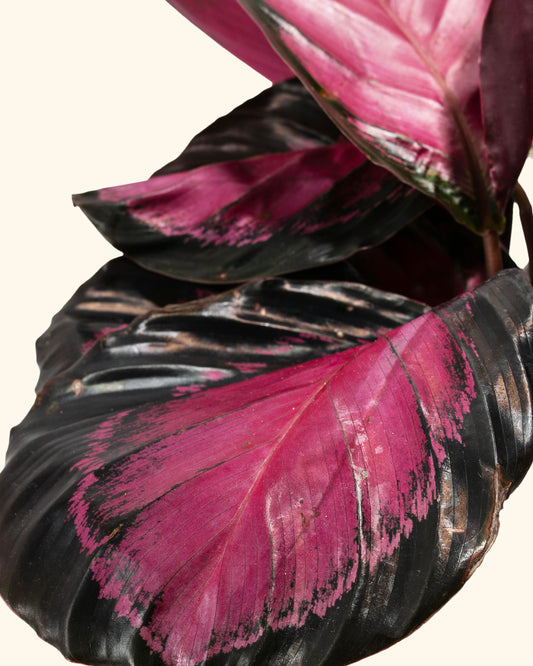
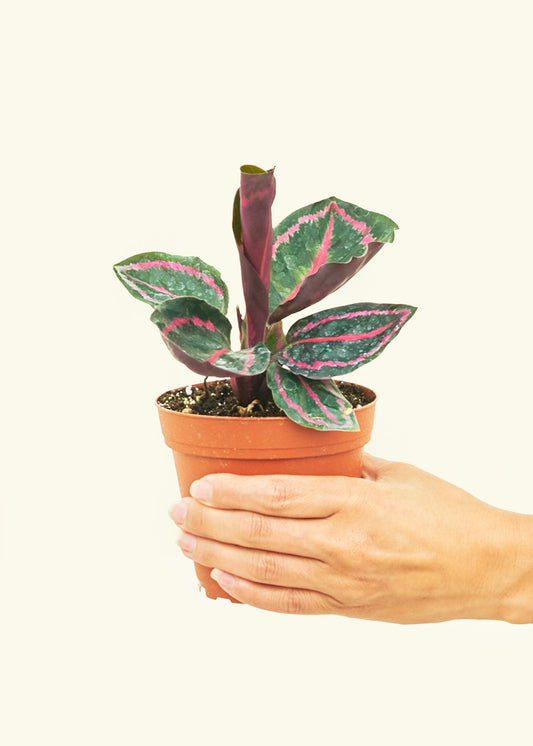
Calathea 'Dottie'
Description: The beautiful Calathea Dottie (Calathea roseopicta 'Dottie') combines dark green with neon pink in its leaf pattern, giving it a superbly intriguing look.
Orbit Peacock Plant
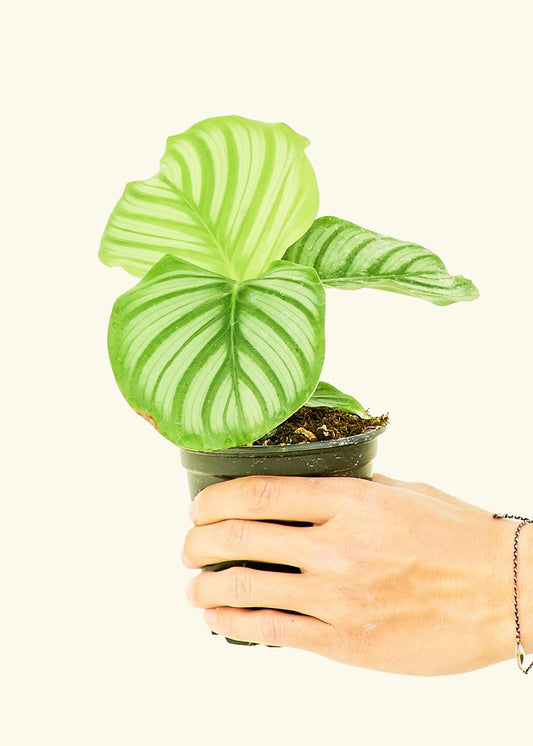
Description: The lime green and silver Orbit Peacock Plant (Calathea orbifolia) has large, rounded leaves that add a refreshing note to any space, like a sip of lemonade on a hot day.
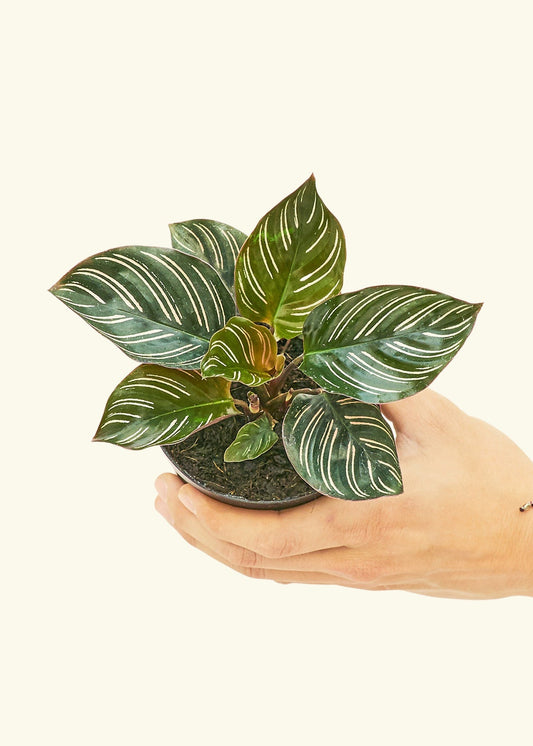
Calathea Pinstripe
Description: The foliage of the incredible Calathea Pinstripe (Calathea ornata) is elegantly striped in dark green, white, and blushing pink.
Frequently Asked Questions (FAQs)
Q: Is Calathea a good indoor plant?
A: Absolutely. Calathea plants are gorgeous prayer plants that purify the air, regulate indoor humidity, and add a tropical vibe to any space. They are relatively easy-care if you meet their growing requirements, and most importantly, pet-safe.
Q: What does an overwatered Calathea look like?
A: An overwatered Calathea usually has yellowing leaves, limp stems, and rotting roots that emit an unpleasant smell. Refrain from watering until the soil dries out, and always test the soil before watering again. If needed, repot your Calathea in fresh soil.
Q: Do you water Calathea from top or bottom?
A: Water your Calathea from the bottom for even hydration of the root system, preventing root rot issues this way. Occasionally, you should water it from the top to flush the soil of accumulated mineral deposits after the feeding season.
Q: Do Calatheas need perlite?
A: Yes, Calatheas will benefit from well-draining soil that holds moisture, but it’s sufficiently aerated at the same time. And adding perlite to the soil achieves this perfectly.
Q: Where is the best place to put a Calathea?
A: Place your Calathea plant in a spot with bright, indirect light (near an East- or North-facing window). Its relatively compact shape makes it perfect for shelves and windowsills. Its love for humidity also makes it suitable for a bathroom with natural light.
Q: Should I cut brown leaves off Calathea?
A: Yes, you should trim your Calathea to remove brown foliage, damaged leaves, and stems. This will encourage fresh, new growth and help you maintain the plant’s shape.
Order Your Gorgeous Calathea for Sale From Rooted Now!