Philodendron Micans Care Guide
About Velvet Leaf Philodendron
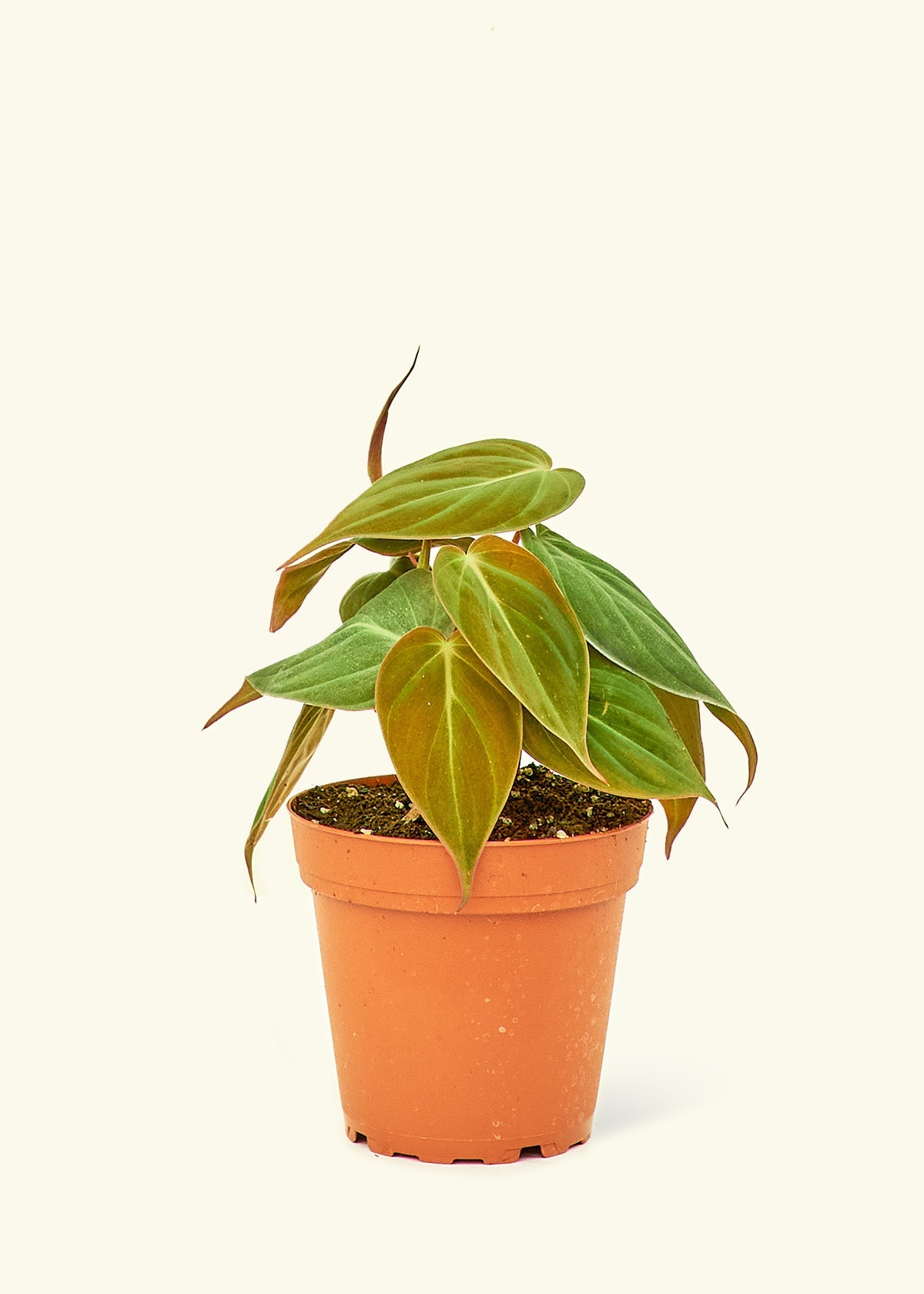
The Velvet Leaf Philodendron (Philodendron micans) is a vining plant with plush, heart-shaped leaves in colors ranging from light pink and bronze to vivid green as the leaves mature. This Philodendron with velvet leaves can grow as a climbing or trailing plant, depending on whether you provide support for it to climb.
This tropical vine is native to Central and South America, and it’s perfect for USDA hardiness zones 10-11.
Thriving for decades with the right care, the Velvet Leaf Philodendron is relatively easy to care for. Make sure you keep it far from your pets, as Philodendrons can be toxic to cats and dogs.
The Velvet Leaf Philodendron symbolizes love, growth, and abundance.
Other Philodendron plants with stunning foliage include the variegated Philodendron White Princess and the sunny Philodendron Prince of Orange.
Philodendron Plant: Benefits
- Striking tropical vine with velvety, colorful leaves
- Cleanses the air from toxins and humidifies indoor air
- Adorable gift plant that symbolizes love and affection
- Perfect for vertical spaces if provided with a moss pole
- Relatively easy-care plant
Velvet Leaf Philodendron Care: Growing Tips
This beautiful indoor plant isn’t difficult to grow, as long as you provide it with the right conditions. Here’s what you need to know about Velvet Philodendron care to help your plant thrive:
Velvet Leaf Philodendron: Light Requirements & Temperature
- Light: The Velvet Leaf Philodendron thrives in medium to bright indirect light. Protect its delicate foliage from direct sunlight.
- Temperature: Your Philodendron plant will appreciate warm temperatures from 65°F to 80°F. Bring it indoors if the temperatures drop below 50°F.
Velvet Philodendron: Watering & Humidity
- Watering: Water your Philodendron vine when the top few inches of the soil are dry. Keep the soil slightly moist but never soggy.
- Humidity: This plant loves high humidity. Avoid misting it, however, to prevent fungal leaf issues.
Philodendron Micans Velvet: Soil, Fertilizer, and Repotting
- Soil: Mix regular potting soil with peat, coco coir, perlite, and bark to create the perfect blend. The soil needs to drain well, but also retain moisture and be nutrient-rich.
- Fertilizer: Feed with a balanced liquid fertilizer during the growing season. Dilute the fertilizer by half.
- Repotting: Repot every 2-3 years or when the roots start growing out of the drainage holes. Use a slightly larger pot.
Philodendron Micans: Propagation
Stem cuttings are the easiest method for propagating Philodendron micans. Take stem cuttings with nodes attached. Place the cuttings in water and change it regularly, until the roots form.
Velvet Leaf Philodendron: Problems and Pruning
Yellowing leaves are a sign of overwatering, whereas crisp leaf tips and edges or curling leaves show that your plant isn’t receiving enough water and humidity. The Philodendron’s foliage may wilt in response to cold or hot temperatures.
Trim any leggy vines in the springtime to keep your Micans Philodendron lush, and remove any damaged leaves regularly.
Velvet Leaf Philodendron: Companion Plants & Placement Options
Philodendron Velvet is an enchanting trailing plant with colorful and relaxing foliage. Its tropical allure makes it perfect for any interior.
Great to Place on
Get a velvety Philodendron micans for sale to add relaxing tropical vibes to your home or office. Train it up a trellis, or let its lush vines cascade down from a bookshelf. This beautiful plant will also look great in hanging pots near a window.
Philodendron Velvet Leaf Grows Well With
Combine your Philodendron with other lush tropical plants:
- Alocasia Black Velvet: Alocasia Black Velvet (Alocasia reginula) is a majestic plant with large, white-veined leaves. Its leaves have a luxuriant, velvet-like feel to them.
- Marble Queen Pothos: The Marble Queen Pothos (Epipremnum aureum) is an exceptionally easy-care vine with beautiful variegated foliage.
- Dragon Tail Plant: If you’re looking for a truly eye-catching foliage plant, look no further than the dramatic Dragon Tail Plant (Rhaphidophora decursiva).
Get Velvet Leaf Philodendron From Hey Rooted Now!




 Care level: No sweat
 Light: No direct sun
 Not pet friendly
 Water: Once a week


