Reverse Spider Plant Care Guide
About Reverse Variegated Spider Plant
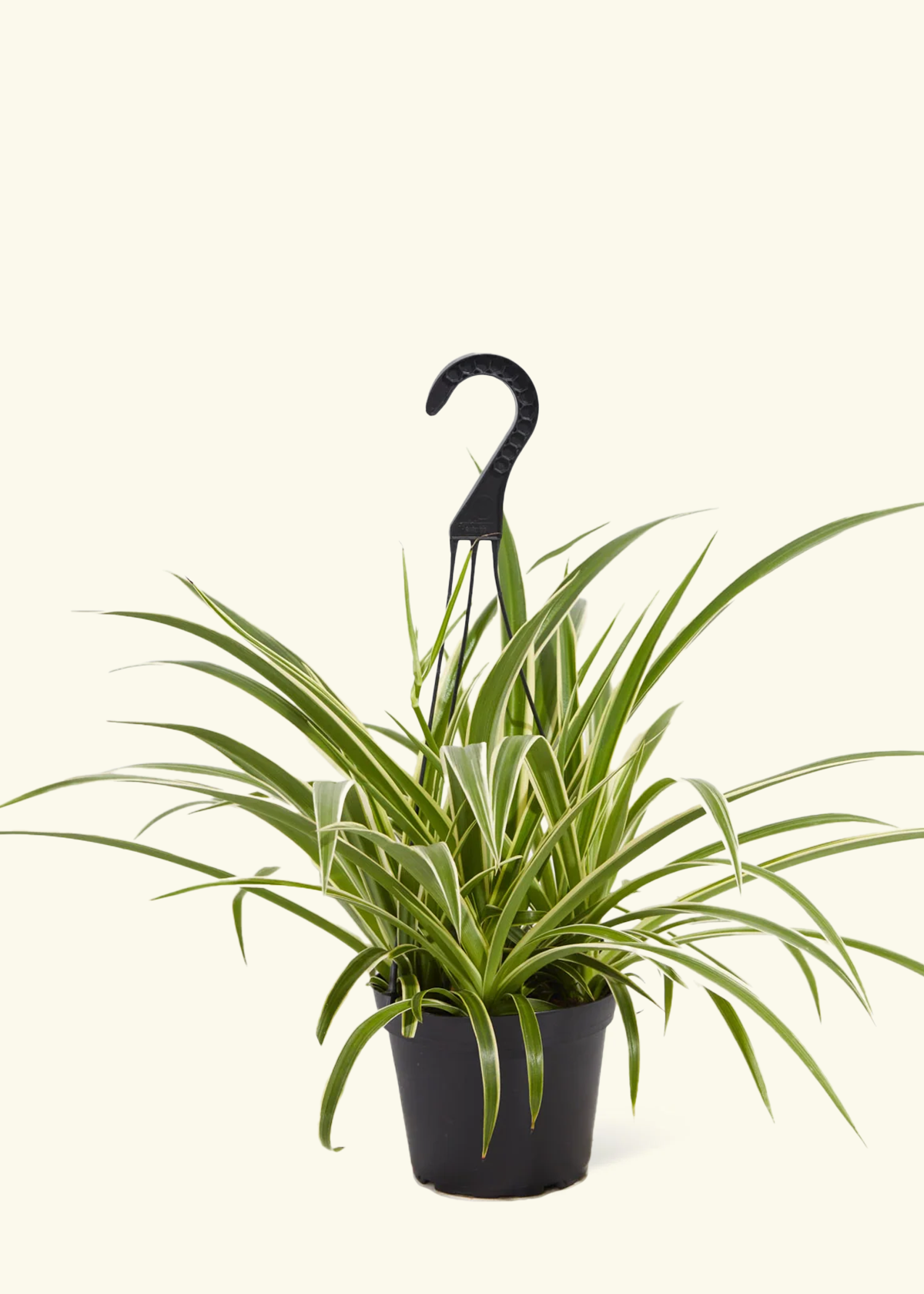
The Reverse Spider Plant (Chlorophytum comosum) has slender, long foliage with a central white stripe on the lime-colored leaves. The difference between a Reverse Spider Plant vs a standard Spider Plant is in the pattern; the Spider Plant has lime-green leaves with light-colored bordering stripes, while the Reverse Spider Plant features a central creamy stripe. This beautiful tropical plant is native to southern Africa. It makes a magnificent plant for porches or patios in USDA hardiness zones 9–11.
Spider plants are easy to care for and thrive even in low light. This leafy plant can live for over 50 years with the right care. The Spider Plant is non-toxic to cats and dogs.
Benefits of Spider Plant
- Beautiful, bushy foliage with a tropical vibe
- Adapts to low-light conditions
- Pet-safe plant, ideal for homes with pets
- Great for hanging baskets and shelves
- One of the best plants for removing toxins and mildew from indoor air
Reverse Spider Plant Care: Growing Tips
The Chlorophytum Comosum Reverse Variegatum is an easy-care plant. It requires a well-chosen location and adds instant style and greenery to your home or office.
Reverse Spider Plant: Light Requirements & Temperature
- Light: Medium to low light is the best choice for the Spider Reverse Plant. Direct sunlight can scorch this indoor plant’s tender foliage.
- Temperature: The best temperatures for lush growth and development range from 65°F to 90°F.
Spider Plant Reverse: Watering & Humidity
- Watering: This beautiful plant loves consistent watering. Keep the soil moist but never soggy.
- Humidity: Medium humidity is sufficient for your Chlorophytum Comosum Reverse. Crisp brown leaf tips indicate that the air is too dry.
Reverse Spider Plant: Soil, Fertilizer, and Repotting
- Soil: Well-draining soil is essential for your Spider Plant’s health. Add coco coir, perlite, or bark to enhance root aeration.
- Fertilizer: Feed twice a month with a balanced liquid fertilizer diluted at half strength.
- Repotting: Repot once every two years into a slightly larger pot.
Spider Plant Reverse: Propagation
All Spider Plant varieties can be propagated in water or soil via the spiderettes (baby plants) growing on the Spider Plant’s stems.
Reverse Spider Plant: Problems and Pruning
While a low-maintenance plant, there are some things to consider when buying a Spider Plant for sale. First, what is the Reverse Spider Plant susceptible to? The greatest danger to this tropical plant comes from overwatering. Yellowing or mushy leaves are signs that your plant’s soil doesn’t drain well or you’re overwatering it. Watch out for pests, like mealybugs or spider mites.
Trim damaged leaves to keep your Spider Plant looking neat and lush. Other than that, this plant doesn’t require pruning.
Reverse Spider Plant: Companion Plants & Placement Options
Add greenery to your home by growing a vibrant Spider Plant. Use their light green foliage for contrast and texture in your plant displays.
Great to Place on
This Spider Plant with reverse variegated foliage is ideal for windows facing south or east. Its cascading foliage will look great in hanging containers, but this plant can also be used to decorate shelves, kitchen counters, and tables.
Reverse Variegated Spider Plant Grows Well With
- Variegated Peace Lily: The easy-care Variegated Peace Lily is known for its air-purifying properties and gorgeous white blooms.
- Philodendron Brasil: The Philodendron Brasil is a stunning cascading plant with variegated foliage.
- Braided Money Tree: The lucky Braided Money Tree has lush foliage with a marvelous tropical vibe.
Shop for Reverse Spider Plant at Hey Rooted Today!




 Care level: No sweat
 Light: Low
 Pet friendly
 Water: Once a week


