Satin Pothos Care Guide
About Satin Pothos
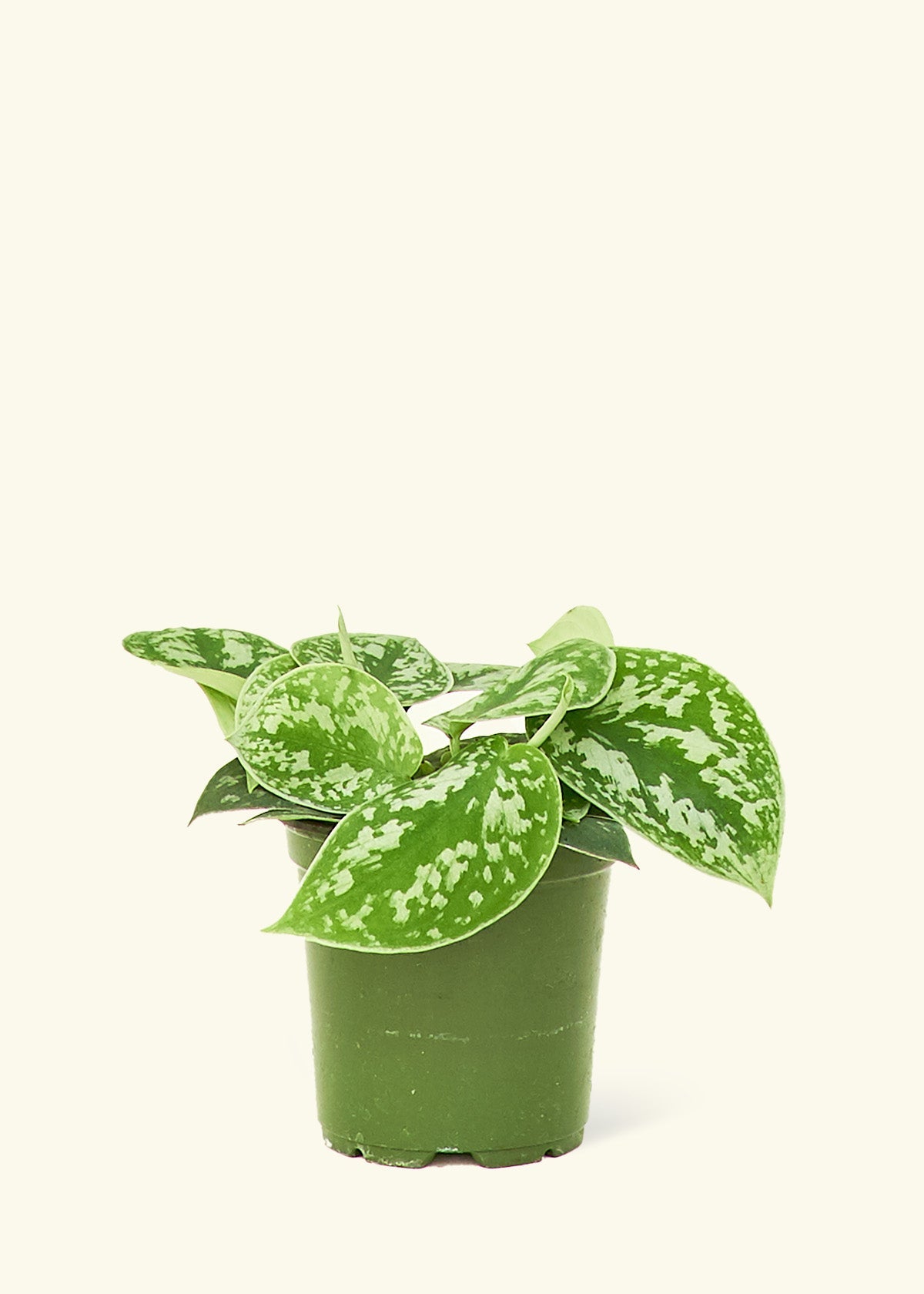
Satin Pothos (Scindapsus pictus Argyraeus) is a stunning vine with variegated leaves. Argyraeus means “silvery” in Latin, referring to its foliage’s metallic sheen. The Satin Pothos is a climbing plant that can be trained up a moss pole, but will trail if unsupported. Satin Pothos varieties differ somewhat in their leaf size and patterns.
This tropical plant is native to the rainforests of Southeast Asia. It thrives in USDA hardiness zones 11-12. This plant thrives indoors for decades with the proper care. Scindapsus Pictus Argyraeus care is very easy, as this plant is low-maintenance and adjusts to various growing conditions.
Because of the calcium oxalate crystals in its foliage, the Satin Pothos is toxic to pets and needs to be kept out of their reach.
The Scindapsus Satin Pothos represents perseverance and growth. This vine is considered a lucky plant in Feng Shui, bringing wealth and good fortune.
Satin Pothos: Benefits
Satin Pothos Care: Growing Tips
Caring for Satin Pothos is easy and undemanding. This plant isn’t fussy about its growing conditions, and you’ll quickly learn how to care for Satin Pothos with these simple tips:
Satin Pothos: Light Requirements & Temperature
- Light: Satin Pothos Argyraeus grows best in bright, indirect light. Direct sunlight can scorch it, while low light causes it to lose its variegation.
- Temperature: Warm temperatures from 65°F to 85°F are perfect for this plant. If grown outdoors, bring it inside before the temperatures drop below 50°F.
Satin Pothos: Watering & Humidity
- Watering: Water your Argyraeus Scindapsus regularly, letting the water drain well after watering.
- Humidity: This tropical vine will benefit from high humidity. Mist the leaves regularly, place the pot on a pebble tray, or use a humidifier.
Satin Pothos: Soil, Fertilizer, and Repotting
- Soil: Well-draining soil is key for your Scindapsus Argyraeus vine. Mix some peat, bark, and perlite into the soil to enhance drainage and aeration.
- Fertilizer: Feed your Argyraeus Pothos with a balanced, liquid fertilizer throughout the growing season.
- Repotting: The Pothos Satin requires repotting every 2-3 years. Use a slightly larger pot with drainage holes.
Satin Pothos: Propagation
Learning how to propagate Satin Pothos will allow you to share this beautiful vine with friends. Especially since Satin Pothos propagation is quite easy. Take stem cuttings in the spring. Place them in clear water, changing it weekly. When the roots grow several inches long, plant the new vines in well-draining, moist soil.
Satin Pothos: Problems and Pruning
Satin Pothos leaves curling usually indicates insufficient watering, low humidity, or temperature shock. If your Satin Pothos has yellow leaves, check whether you’re overwatering.
Trim leggy vines in the spring to encourage fuller growth, and regularly remove damaged leaves.
Satin Pothos: Companion Plants & Placement Options
Satin Pothos Scindapsus Pictus is an elegant, cascading vine. Combine it with other plants for a lush jungle look.
Great to Place on
A climbing Satin Pothos is the perfect plant for adding stylish tropical vibes to your home or office. The Satin Pothos makes a gorgeous hanging plant, with its cascading silvery vines. Due to its compact size, it fits perfectly on smaller shelves or tabletops. It will also climb if given the chance, making it ideal for vertical spaces.
Satin Pothos Plant Grows Well With
Combine your Scindapsus Pictus Satin Pothos with other tropical plants for lush greenery:
- Baby Rubber Plant: The Baby Rubber Plant (Peperomia obtusifolia) is an easy-care, compact plant with delightful, thick leaves.
- Cebu Blue Pothos: With its sea-green foliage, the Cebu Blue Pothos (Epipremnum pinnatum) will add color and vibrancy to your interior.
- Maidenhair Fern: Maidenhair Fern (Adiantum aethiopicum) is a graceful, small plant that thrives in warm, humid environments.
Get Satin Pothos for Sale From Hey Rooted Now!




 Care level: No sweat
 Light: High
 Not pet friendly
 Water: Once a week


