Parlor Palm Care Guide
To care for a Parlor Palm, place it in low to bright, indirect light, water when the top inch of soil is dry, and keep it between 65 and 80°F with moderate humidity. Feed monthly in spring and summer. It grows slowly, reaches 3 to 4 feet indoors, and is safe for cats and dogs.
About the Parlor Palm Plant
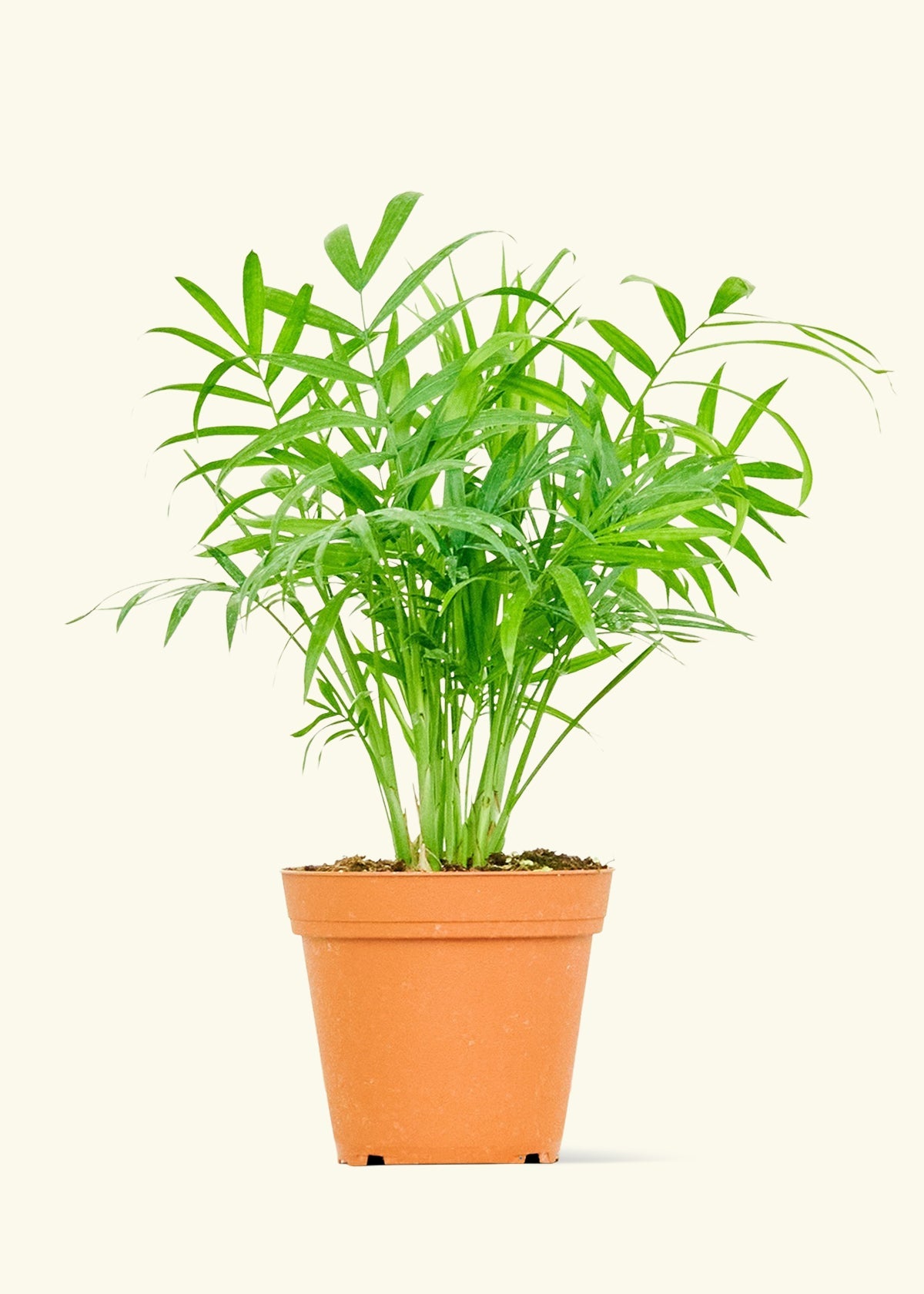
Meet the lush and vibrant Parlor Palm (Chamaedorea elegans) - a must-have if you’re a fan of tropical, exotic houseplants. This beauty is easy to care for, with a slow-growing nature and arching, feathery fronds. Native to Guatemala and southern Mexico, it thrives in warm climate zones (10-12). It prefers medium to bright, filtered light and relatively high humidity.
The vivid-green Parlor palm symbolizes peace and tranquility, and with its calming presence, it adds a tropical flair to any indoor or outdoor space. Moreover, it’s pet-friendly, so worry not about your furry companions around this plant.
Other beautiful indoor palms include the Majesty Palm, Pygmy Date Palm, and Ponytail Palm.
Parlor Palm: Benefits
- Has air-purifying benefits
- A slow-growing palm that stays compact for longer
- Regulates indoor humidity
- Non-toxic plant, safe for cats and dogs
- Makes a great gift
Parlor Palm Plant Care: Growing Tips
The Parlor Palm is low-maintenance and adaptable, ideal for both people new to plant care and seasoned plant enthusiasts. Learn how to care for a Parlor palm below:
Parlor Palm: Light Requirements & Temperature
- Light: The Parlor Palm grows best in medium to bright, indirect light. Short periods of low-light exposure won’t harm it either.
- Temperature: Parlor palm prefers warm temperatures (from 65°F to 80°F). Protect it from heating sources and cold drafts.
Parlor Palm: Watering & Humidity
- Watering: Water your Parlor Palm once a week, depending on the humidity, lighting, and temperature. Soil should be consistently moist but not soggy.
- Humidity: The Chamaedorea elegans thrives in high humidity (50-70%). Use a humidifier or pebble tray to prevent brown leaf tips.
Parlor Palm Tree: Fertilizer, Soil, and Repotting
- Soil: Well-draining soil is a must for this palm variety to avoid root rot issues and yellowing foliage.
- Fertilizer: Feed with balanced fertilizer monthly in the spring to encourage optimal growth.
- Repotting: The Parlor palm is slow-growing; hence it doesn’t require frequent repotting (about every 2-3 years is ideal).
Parlor Palm: Propagation
Propagate your Parlor Palm via division in the spring. Separate the root clumps carefully, ensuring each section has healthy, strong roots. Plant them in individual pots with fresh, moist soil. Place the new palm plants in a spot with indirect light.
Parlor Palm: Problems and Pruning
Brown leaves can be an issue, as this palm tree doesn’t like harsh sunlight. In addition, extremely low humidity can also result in damage to its beautiful fronds. Prune your Parlor palm to trim yellow foliage. Treat any pests with organic insecticide and clean the leaves with a damp cloth occasionally to remove dust.
Parlor Palm: Companion Plants & Placement Options
Transform your space with the lush Parlor Palm! Grow it as part of a larger tropical display or create a focal point by making it stand out in your bedroom, living room, or office.
Great to Place on
Your vibrant Parlor Palm makes the ideal floor plant when large and mature. Be it placed in your living room or entry hall (hence the name), it will brighten your space in an instant. While still young and small, it can decorate desks and side tables. If kept outdoors in the summer, bring it in when temperatures drop below 55°F.
Parlor Palm Plant Grows Well With
Pair your Parlor palm tree with exotic greenery that requires similar growing conditions:
- Swiss Cheese Monstera: The Swiss Cheese Monstera features large, fenestrated leaves that contrast with the Parlor Palm’s arching fronds.
- Cast Iron Plant: The hard-to-kill Cast Iron Plant complements the Parlor Palm and is a great addition to your tropical plant display.
- Money Tree: Get the lucky Money Tree as a companion plant to your Parlor Palm, as they both enjoy indirect light and high humidity.
Shop for Parlor Palm for Sale at Hey Rooted Today!
Choose Small (about 12 inches tall in a 4-inch pot), Medium (about 20 inches tall in a 6-inch pot), or Extra Large, in a grow pot or a Classic planter in Polar White, Rose Pink, Charcoal, or Oat. Every Parlor Palm is covered by our 30 Day Happiness Guarantee.
Parlor Palm FAQs
Is a parlor palm safe for cats and dogs?
Yes. The ASPCA lists the parlor palm (Chamaedorea elegans) as non-toxic to cats and dogs, which makes it one of the safest palms for homes with pets.
Can a parlor palm live in low light?
Yes. It's one of the most shade-tolerant indoor palms, and it got its name from the dim Victorian parlors where it was a fixture. Growth slows in low light, so medium, indirect light keeps it fuller.
How big does a parlor palm get indoors?
Indoors, a parlor palm usually reaches 3 to 4 feet tall over several years. It grows slowly, so a small plant stays tabletop-sized for a long time.
Why are the tips of my parlor palm turning brown?
Brown tips most often come from dry air, uneven watering, or salt buildup from fertilizer and tap water. Raise the humidity, water when the top inch of soil is dry, and flush the soil with plain water every few months.
Is a parlor palm good for a bedroom?
Yes. It handles the lower light of most bedrooms, stays compact, and is pet safe. Keep it away from heaters and drafty windows.
How often should I water a parlor palm?
About once a week in spring and summer, when the top inch of soil is dry. In winter, every 10 to 14 days is usually enough. Water until it drains, then empty the saucer.




 Care level: No sweat
 Light: Low
 Pet friendly
 Water: Once a week


