Cast Iron Plant Care Guide
The Cast Iron Plant earned its name: it handles low light, dry air, cool rooms and the occasional missed watering. Water when the top 2 inches of soil are dry, keep it out of direct sun, and it will keep putting up glossy, dark green leaves for years. It's pet safe.
About Cast Iron Plant
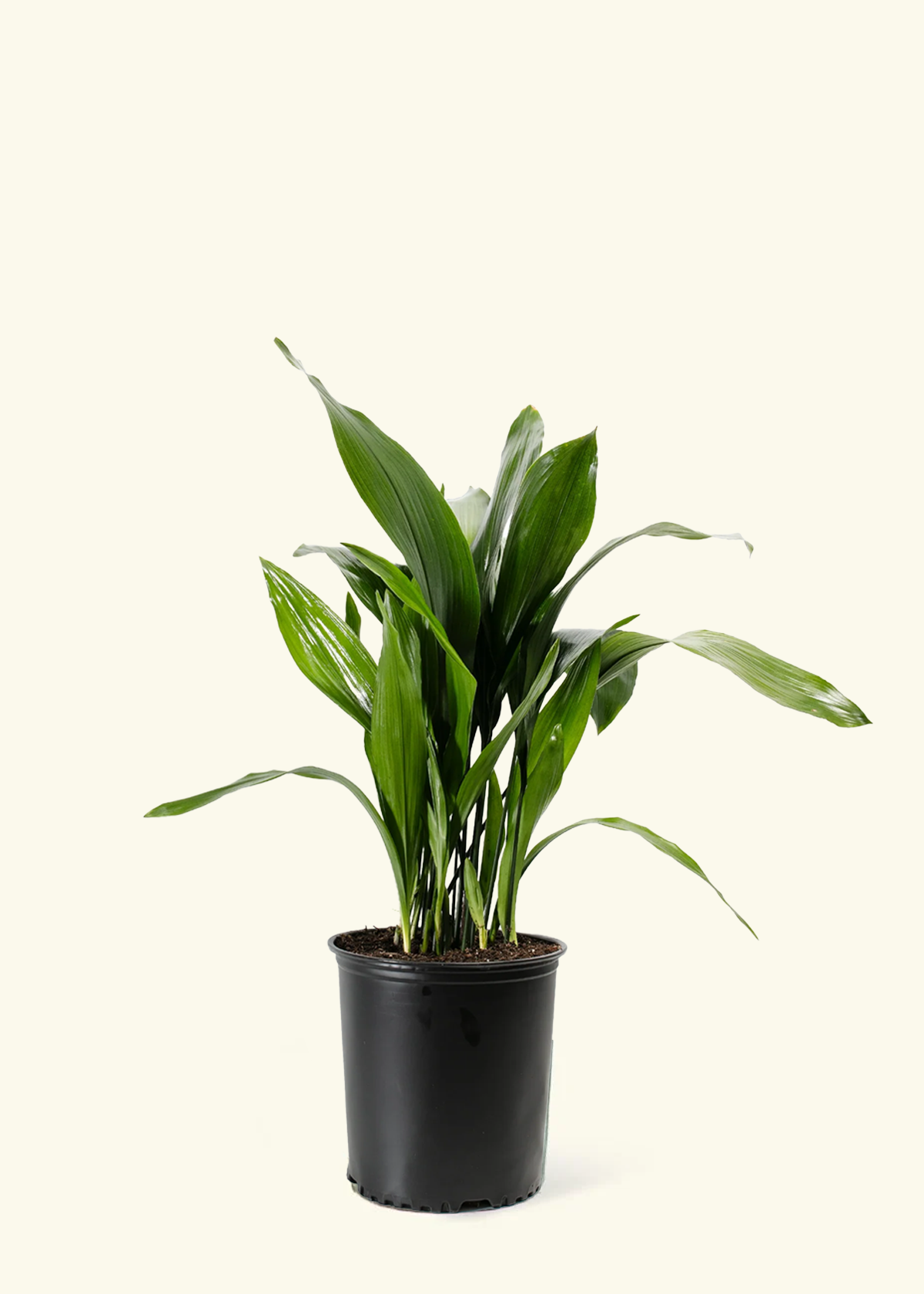
The Cast Iron Plant (Aspidistra elatior) is a hardy, evergreen houseplant that tolerates occasional neglect. Long, glossy, dark green leaves form a bushy clump that fills an empty corner. It belongs to the Asparagaceae family, is native to Japan, and is hardy outdoors in USDA zones 7 to 11. Beginners and busy owners like it because it handles shade, dry soil, and a wide range of light.
It is pet-safe, so it suits homes with cats and dogs. Its nickname comes from its toughness: Aspidistra can go long stretches in dry soil and deep shade.
Cast Iron Plant: Benefits
- Thrives in low light where most plants won't.
- Withstands sudden changes and recovers easily if stressed
- Non-toxic, pet-friendly houseplant
- With lush and vibrant green foliage
- Makes a great gift for beginners
Cast Iron Plant Care: Growing Tips
One of the most resilient houseplants, Aspidistra suits new plant owners and anyone short on time. It thrives in almost any room with little attention. See our care tips below for your home or office.
Light and Temperature
- Light: It grows best in low to medium indirect light and tolerates deep shade. Avoid direct sun, which bleaches and scorches the leaves.
- Temperature: This plant grows well in temperatures between 60°F and 80°F. If it spends summer outside, bring it in before the first frost, and keep it away from cold drafts and heating vents in winter.
Watering and Humidity
- Watering: Aspidistra is a low-water plant and can tolerate dry conditions. Water it only when the soil is dry to prevent overwatering and root problems.
- Humidity: Average indoor humidity of 40 to 50% is fine. Very dry air can cause brown leaf tips; trim them with clean scissors.
Soil, Fertilizer, and Repotting
- Soil: Ensure that your Aspidistra plant is potted in a well-draining potting mix.
- Fertilizer: Fertilize your plant once a month during the active growing season.
- Repotting: Cast Iron plants are slow growers and don’t require frequent repotting (every 2-3 years). They grow better if slightly rootbound.
Propagation
Propagate it by division. Gently separate the rhizomes and transplant the sections in individual pots with fresh, well-draining soil. Place them in medium light to protect the young plants from sunburn.
Problems and Pruning
Common issues include root rot from overwatering and scorched leaves from direct sun. Fungal leaf spot and pests can also be an issue. Remove damaged leaves with sterile scissors and clean the plant’s foliage from dust with a damp cloth.
Companion Plants and Placement
Hardy and lush, it brings evergreen color to shady spots where most houseplants fade, indoors or on a covered patio.
Great to Place on
Add a Cast Iron plant to your bedroom or living room to decorate a bedside table, shelves, or a coffee table. A large Cast Iron plant can be a great floor plant, adding visual interest as a green focal point in any room.
Grows Well With
Your stunning Aspidistra plant grows well with the following easy-to-care-for plants:
- Snake Plants: Snake plants have similar needs as the Cast Iron plants, so you can group them for a lush indoor jungle look.
- ZZ Plant: The hardy ZZ Plant is an ideal companion for your Aspidistra plant, as it requires similar growing conditions.
- Money Tree: Pair your Cast Iron Plant with a Braided Money Tree to add the ultimate exotic vibes to your space.
Size, Flowers, and Outdoor Use
- Size: Indoors or out, Aspidistra typically grows 12 to 36 inches tall and wide, spreading slowly from underground rhizomes. That slow growth is why a full, 2 to 3 foot plant costs more than a young one.
- Flowers: It rarely blooms indoors. When it does, in early summer, small cup-shaped flowers open close to the soil, mostly hidden under the leaves.
- Outdoors: In USDA zones 7 to 11 this evergreen makes a reliable ground cover for partial to full shade, filling bare spots under trees. Keep it out of direct sun.
- Winter: Growth slows, so water less often and skip fertilizer until spring.
Cast Iron Plant FAQs
What size should I get, Medium or Extra Large?
Medium suits a tabletop, plant stand or small corner. Extra Large is a floor plant, about 2 to 3 feet tall in a 10-inch pot.
Is the cast iron plant really hard to kill?
Very nearly. It tolerates low light, dry air and irregular watering. Soggy soil and direct sun are the two things that hurt it.
Can cast iron plants grow outside?
Yes, in shade in roughly zones 7 to 11, where it is often used as a ground cover.
Is a cast iron plant toxic to pets?
No. It's non-toxic to cats and dogs.




 Care level: Pretty chill
 Light: Low
 Pet friendly
 Water: Once a week


