Red Prayer Plant Care Guide
To care for a Red Prayer Plant, give it medium to bright, indirect light, keep the soil lightly moist with filtered water, and hold humidity at 50% or higher. It likes 60 to 75°F and a light feeding every few weeks in spring and summer. It's safe for cats and dogs.
About Red Maranta
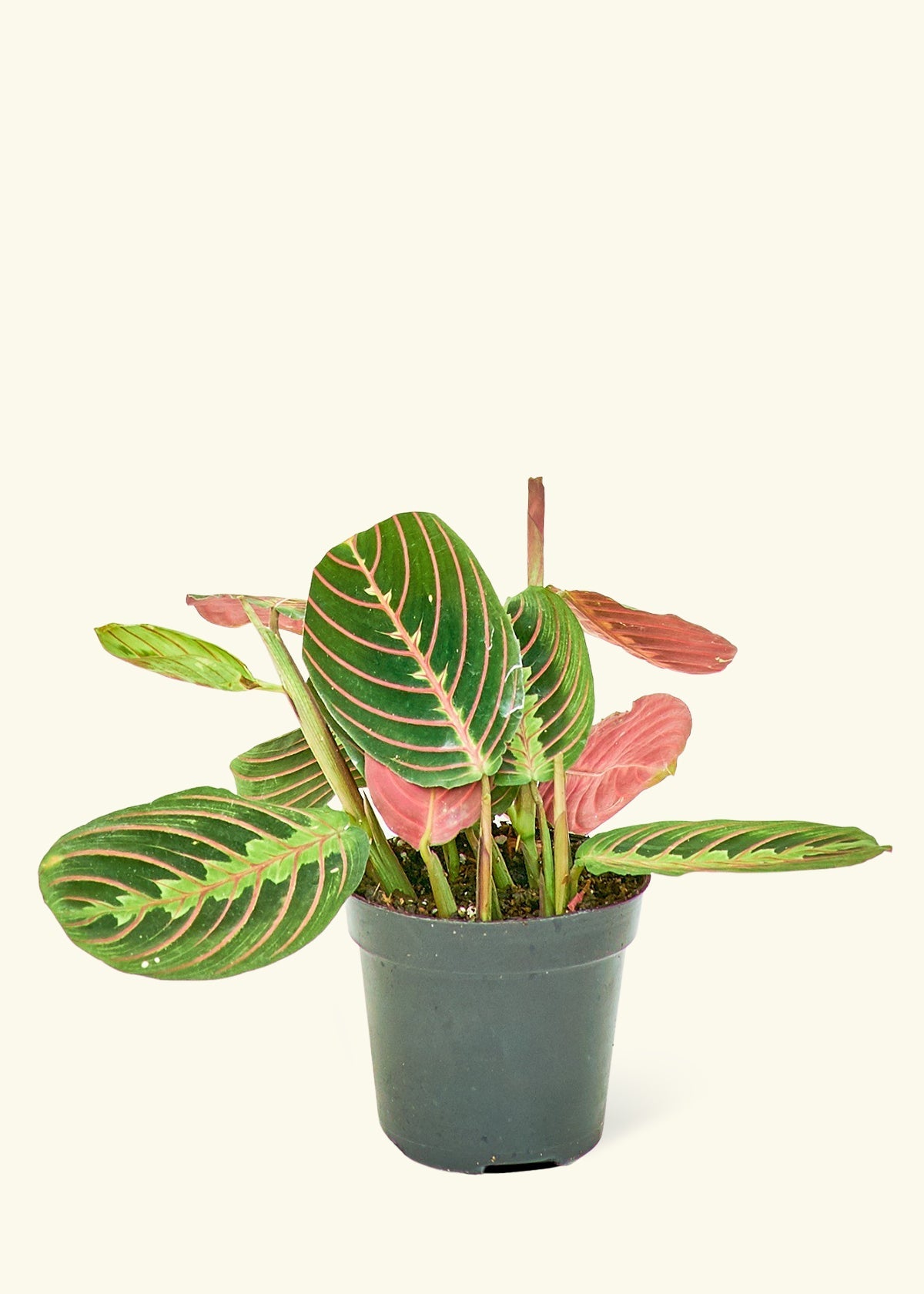
The Red Maranta (Maranta leuconeura) is a red-veined prayer plant with oval leaves featuring a bright red herringbone pattern and a showy purple-pink underside. This vibrant tropical plant is native to Brazil and other areas of South and Central America. It will thrive outdoors on a shaded porch in hardiness zones 11-12.
The Red Maranta Prayer Plant is a moderately easy-care plant; in the right conditions, it will grow into a spectacular trailing plant with eye-catching, multicolored foliage. Furthermore, the lovely Maranta plant is pet-friendly and non-toxic, making it a perfect choice for homes with pets. The Red Maranta is called a prayer plant because its leaves follow its circadian rhythm – they fold in the evening, as if in prayer, and unfold with the first morning light.
Maranta Plant: Benefits
- Decorative and uniquely patterned foliage
- Pet-safe plant that’s perfect for plant owners
- Efficiently cleanses indoor air from toxins
- Ideal for shelves or hanging baskets
- Symbolizes thankfulness and devotion
Red Maranta Prayer Plant Care: Growing Tips
Caring for your Maranta plant is simple. It needs bright light, high humidity, and regular watering. Here are some vital Red Maranta care tips to keep this plant healthy and beautiful:
Red Prayer Plant: Light Requirements & Temperature
Maranta Red: Watering & Humidity
- Watering: For optimal Maranta plant care, water your prayer plant abundantly with filtered or distilled water, and then let it drain.
- Humidity: The Red Maranta Prayer Plant requires high humidity. Keep its pot on a pebble tray, group it with other indoor plants, or use a humidifier.
Red Maranta: Soil, Fertilizer, and Repotting
- Soil: The best soil for this plant should be well-draining and moisture-retaining at the same time. Try mixing standard potting soil with perlite, sphagnum moss, and orchid bark.
- Fertilizer: Proper Maranta Leuconeura care includes feeding your plant about twice a month with a balanced liquid fertilizer diluted at half-strength.
- Repotting: Repot once every two years into a slightly larger pot.
Red Prayer Plant: Propagation
Maranta Leuconeura propagation is relatively easy. Divide a mature plant while repotting, or take stem cuttings and propagate them in water or moist soil.
Maranta Red: Common Problems
Curling leaves are often a sign of insufficient water, while low humidity is the reason for dry brown tips. Yellowing leaves usually indicate overwatering. Leggy stems show that the plant needs more sunlight.
Red Maranta Prayer Plant: Companion Plants & Placement Options
The stunning, patterned Maranta Leuconeura prayer plant is perfect for adding a pop of color to your interior.
Great to Place on
Place this lovely Maranta variety on shelves or coffee tables where you’ll see its multicolored leaves. Because they love humidity, these beautiful prayer plants are a great choice for well-lit bathrooms or kitchens. It will also help improve the air quality in bedrooms or home offices.
Red Maranta Grows Well With
The bright foliage of your Maranta Leuconeura with its red highlights will look amazing grouped with these spectacular foliage plants:
- Calathea Plants: Calathea plants are known for the stunning, colorful patterns on their oval or elongated leaves.
- Lemon Lime Prayer Plant: The verdant foliage of the Lemon Lime Prayer Plant gives this pet-friendly plant a refreshing allure.
- Peperomia Plants: Peperomia plants are easy-care, pet-friendly, and fun to grow.
Order Red Prayer Plant From Hey Rooted Now!
Choose Small (about 10 inches tall in a 4-inch pot) or Medium (about 14 inches tall in a 6-inch pot), in a grow pot or a Classic planter in Polar White, Rose Pink, Charcoal, or Oat. Every Red Prayer Plant is covered by our 30 Day Happiness Guarantee.
Red Prayer Plant FAQs
Why do prayer plant leaves fold up at night?
It's a daily rhythm called nyctinasty. A small joint at the base of each leaf, the pulvinus, shifts water pressure in the evening and raises the leaves upright, like hands in prayer. They lower again in the morning.
What is the best soil for a maranta?
A light mix that stays slightly moist but drains well. Combine regular potting soil with perlite and some orchid bark, peat, or coco coir. Avoid dense, heavy soil, which stays soggy and rots the roots.
Why are my prayer plant's leaves curling or getting brown tips?
Curling usually means the plant is thirsty or the air is too dry. Brown, crispy tips point to low humidity or minerals in tap water. Switch to filtered or distilled water and raise the humidity around it.
Is the red prayer plant safe for cats and dogs?
Yes. The ASPCA lists Maranta leuconeura as non-toxic to cats and dogs.
How much light does a red prayer plant need?
Medium to bright, indirect light, such as near an east window. It tolerates lower light but grows slower with duller veins. Keep it out of direct sun, which bleaches and scorches the leaves.
What is the difference between a maranta and a calathea?
Both belong to the prayer plant family (Marantaceae), and both move their leaves. Maranta is smaller and spreads or trails, with oval leaves. Calathea grows upright with larger leaves and tends to be fussier about water and humidity.




 Care level: No sweat
 Light: Medium
 Pet friendly
 Water: Once a week


