30 Day Risk-Free Guarantee
Rattlesnake Calathea Care Guide
About Calathea Rattlesnake
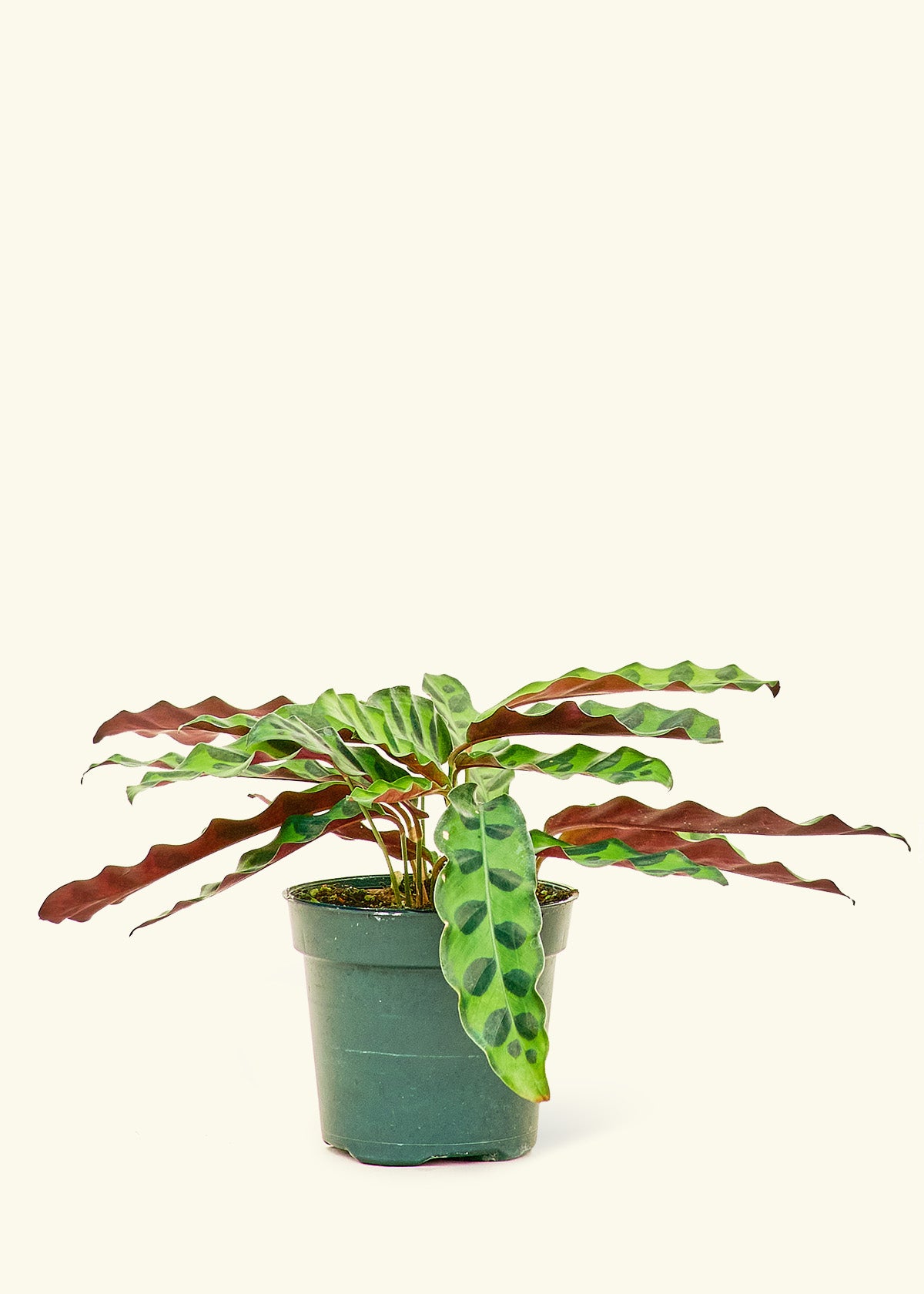
The Calathea Rattlesnake (Calathea lancifolia), also known as Goeppertia insignis, is a tropical plant with elongated, wavy leaves that feature a bold dark green pattern on a lighter green background. The Rattlesnake Calathea is native to Central and South America and thrives in USDA hardiness zones 10-11. This plant is relatively low-maintenance and safe for pets. It’s a variety of prayer plant, named for its unique rhythm of lowering and lifting its leaves, as if in worship.
The Calathea Rattlesnake Lancifolia symbolizes new beginnings and renewal. Calatheas are remarkable plants with spectacular leaf patterns.
Calathea Plant: Benefits
- Stunning patterned foliage
- Improves indoor air quality
- Pet-friendly plant
- Wonderful gift plant that symbolizes new beginnings
- Does well in medium light away from windows
Calathea Rattlesnake Care: Growing Tips
Caring for your Calathea isn’t difficult once you know its needs. See below our expert growing tips:
Calathea Rattlesnake: Light Requirements & Temperature
- Light: Providing the right light is important for this type of prayer plant. Medium light is best, as direct sunlight can scorch this plant’s leaves.
- Temperature: Temperatures from 65°F to 75°F are ideal for your Calathea plant. Keep it away from cold drafts.
Rattlesnake Calathea: Watering & Humidity
- Watering: Water regularly, so the soil stays slightly moist but not soggy. Use filtered water or tap water that has sat overnight to release harmful chemicals.
- Humidity: The Calathea Rattlesnake plant prefers high humidity. Use a pebble tray for its pot, mist the leaves, and group it with other plants.
Calathea Rattlesnake: Soil, Fertilizer, and Repotting
- Soil: Well-draining soil, rich in organic matter, is the best choice for your Calathea Lancifolia Rattlesnake. Mix regular potting soil with peat moss and perlite.
- Fertilizer: Feed with a nitrogen-rich fertilizer each month during the growing season to support healthy foliage.
- Repotting: After getting your Calathea Rattlesnake for sale, don’t repot immediately. Once it adjusts to its new home, repot it in the spring into a pot 2 inches larger. This plant needs repotting every 2 years.
Rattlesnake Calathea: Propagation
Dividing a mature plant is the easiest propagation method for Rattlesnake Calathea. Gently tug the roots apart, and then plant the new plants in well-draining, moist soil.
Calathea Rattlesnake: Common Problems
Crisp leaf edges or curling leaves are usually the result of underwatering or dry air. Trimming the dead leaves and keeping the soil free of debris is a vital part of Calathea Rattlesnake plant care.
Calathea Rattlesnake: Companion Plants & Placement Options
The magnificent Calathea Lancifolia Rattlesnake plant makes an amazing statement in any interior.
Great to Place on
Perfect for spaces with high humidity, like bathrooms, the Rattlesnake Calathea makes a gorgeous accent as a standalone plant. Use it as a highlight on tables, shelves, or the kitchen counter.
Rattlesnake Calathea Grows Well With
Mix and match the colorful Calathea Rattlesnake with other patterned plants for a dazzling jungle paradise indoors:
- Lemon Lime Prayer Plant: The sunny colors and bold pattern of the Lemon Lime Prayer Plant make it the perfect companion for plants with darker green or variegated foliage.
- Calathea Dottie: The Calathea Dottie has a characteristic neon-pink aureole on its rounded, dark green leaves, giving it a radiant and unique look.
- Peperomia Plants: Peperomia plants are easy-care and versatile; these charming houseplants are prized for their patterned, striped, or glossy foliage.