Calamansi Tree Care Guide
About Calamansi
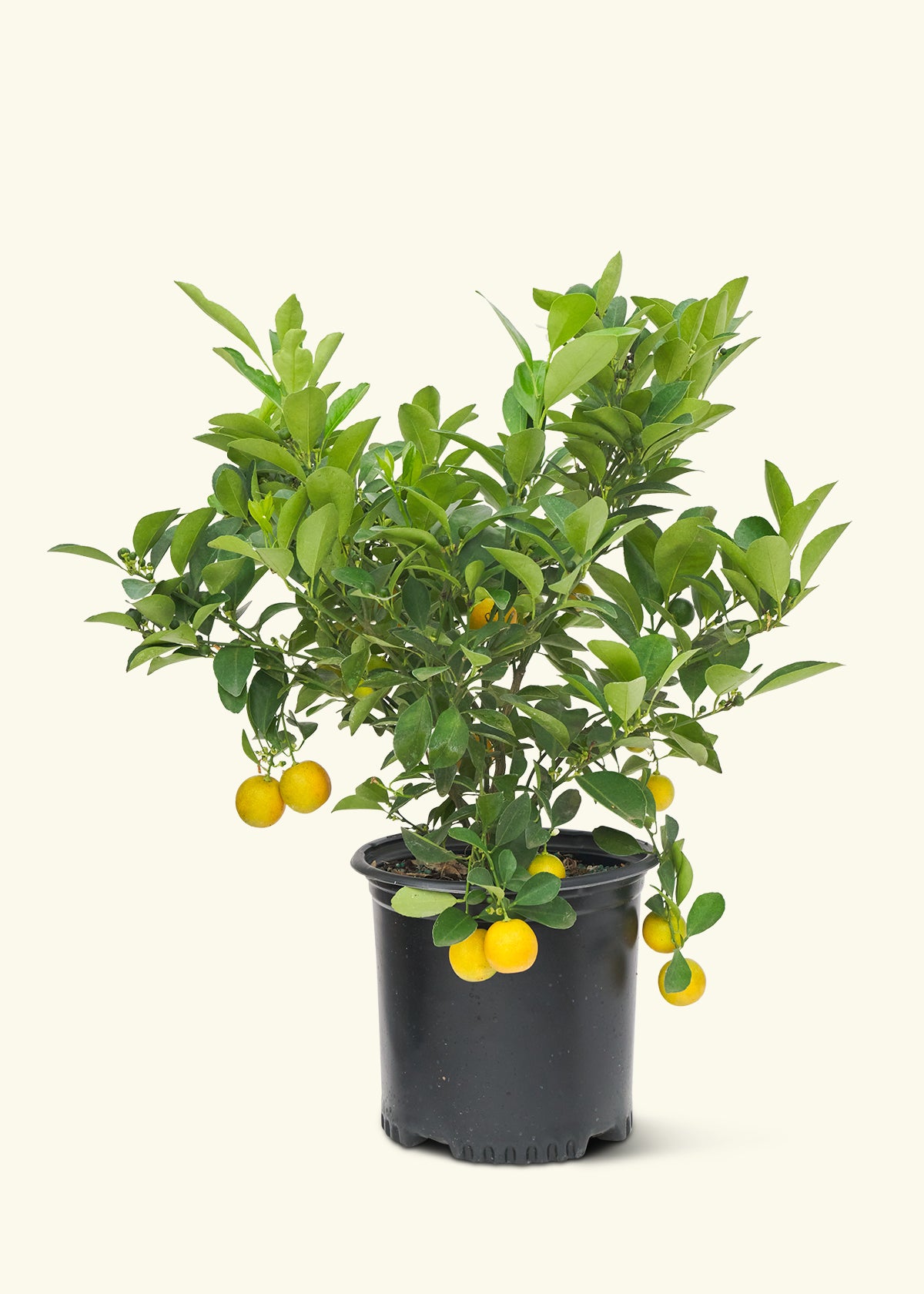
Calamansi (Citrus microcarpa) is an evergreen citrus tree with glossy green leaves and small, orange fruit. Also known as Calamondin, it is a tropical plant that’s suitable for growing in containers. So, what is Calamansi? Many people mistake Calamansi plants for miniature oranges. Often referred to as Calamondin Orange, the Calamondin tree is actually a hybrid of tangerine and kumquat trees. There’s also no difference in Calamondin vs Calamansi growing requirements, as they’re the same plant!
Calamansi fruit is sour, with a thin, sweet peel that gives the fruit its distinctive, tangy taste. And what is Calamansi fruit used for? Anything from flavoring Asian cuisine to drinks, desserts, sauces, and more. A mature Calamondin Orange reaches 3-8 ft in size, and our large-size Calamansi trees are about 2 ft tall. They’re low-maintenance, and with proper care, these beautiful trees can live for several decades. Calamondin plants thrive in USDA hardiness zones 9-11, tolerating lower temperatures than other citrus varieties. Keep them away from pets’ reach, as they contain essential oils that are toxic to cats and dogs.
Calamansi: Common Names
- Kalamansi
- Panama Orange
- Golden Lime
- Calamansi Orange
- China Orange
- Philippine Lime
Calamansi: Benefits
- Ideal for growing in containers
- Produces fruit year-round
- Fruit contains antioxidants and vitamin C
- Fragrant blossoms
- Tolerates medium to low temperatures
- Makes a thoughtful and beautiful gift
Calamansi Tree Care: Growing Tips
Calamansi is easy to grow indoors or in containers. Here’s how to care for your Calamansi bush:
Calamansi: Light Requirements & Temperature
- Light: Calamansi limes require 6-8 hours of direct sunlight daily. Use grow lights for indoor plants in winter, as Calamansi trees require sufficient light to develop fruit.
- Temperature: The ideal temperature for Calamansi Orange is 70°F – 90°F.
Calamansi Tree: Watering & Humidity
- Watering: Calamansi requires regular watering about once a week (rarer in winter). The soil should dry out between waterings.
- Humidity: Prefers high to medium humidity; mist your plant regularly in the mornings, or place your Calamansi Lime on a pebble-filled tray.
Calamansi Plant: Soil, Fertilizer, and Repotting
- Soil: Use well-draining soil. Add some perlite for good aeration and compost to provide the right nutrients.
- Fertilizer: Use a slow-release fertilizer for citrus trees during the growing season.
- Repotting: Repot your Calamansi in the spring, every two years, into a pot 2 inches larger than the previous one.
Calamansi: Propagation
You can propagate your Kalamansi tree from seed or via cuttings. Plant seeds in moist soil and place in a warm, bright location, keeping the soil moist. Use cuttings that are about 10 inches long with 2-3 nodes and plant them in moist soil.
Calamansi Tree: Pruning and Common Issues
Trim any damaged leaves on your plant. You can also prune your Calamansi occasionally to maintain a neat tree shape. Leaf drop can occur when moving your Calamondin orange tree indoors. This may be due to sudden shifts in temperature or light levels. Spider mites can also cause problems for these plants.
Calamondin: Companion Plants & Placement Options
The Calamansi lime tree is the ideal centerpiece for patios or sunny rooms. You can pair it with a variety of plants to create a beautiful green display.
Great to Place on
Grow your Calamondin plant on sunny porches or in sunrooms. These charming fruit trees make great floor plants and are perfect for homes without pets and outdoor spaces in warmer climates.
Calamansi Tree Grows Well With
Combine your Philippine Calamansi tree with other edible plants, available at Hey Rooted, to use in cooking or drinks:
- Olive Tree: The easy-care Olive Tree is ideal for patios or sunny rooms.
- Mint: Grow some fresh Mint with your citrus trees to deter pests; you can use the leaves in cocktails and salads.
- Basil: Plant delicious Basil on your porch to deter pests and attract pollinators.
Order Calamansi Tree for Sale From Rooted Now!




 Care level: No sweat
 Light: Direct
 Not pet friendly
 Water: Once a week


