Boston Fern Care Guide
About Boston Fern Plant
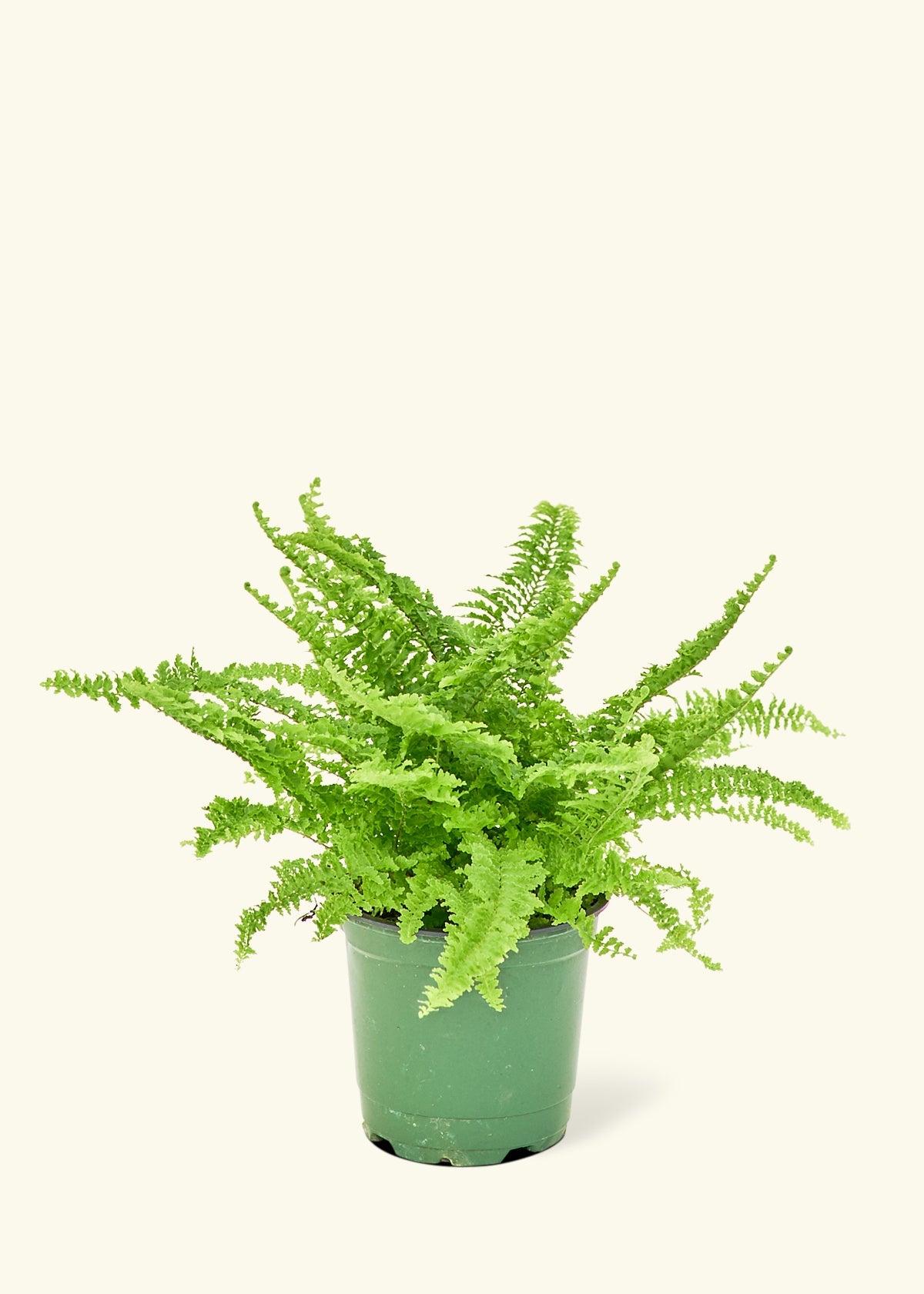
Add the Boston fern (Nephrolepis exaltata) to your indoor space and enjoy its vibrant look and air-filtering qualities! This beauty is a timeless favorite known for its lush, arching fronds and soft, feathery texture. A tropical plant that thrives in warm and humid climates, the Boston fern plant grows outdoors in USDA hardiness zones 9–11. Many gardeners in cooler regions enjoy growing Boston fern outdoors in shaded patios during warmer months.
Known for its classic elegance, the Boston fern indoor plant is considered easy to care for, provided it’s grown in higher humidity. It is pet-friendly, making it a safe option for households with cats and dogs. Symbolically, Boston fern plants represent sincerity and new beginnings.
Boston Fern Benefits
- Adds lush, cascading greenery to indoor and outdoor spaces
- Pet-friendly and non-toxic to cats and dogs
- Ideal for hanging planters and baskets
- One of the best air-purifying plants
- A thoughtful gift for beginner plant enthusiasts
Boston Fern Care: Growing Tips
Proper Boston fern care requires consistent moisture and humidity. Understanding how to care for a Boston fern ensures optimal health and vibrant, full fronds year-round.
Boston Fern: Light Requirements & Temperature
- Light: Bright, indirect light is ideal for a thriving Boston fern indoor plant. Too much direct sunlight can scorch the fronds, while too little light may slow growth.
- Temperature: Average household temperatures between 60°F and 75°F are ideal. In terms of Boston fern temperature tolerance, avoid cold drafts and temperatures below 55°F to prevent stress.
Boston Fern: Watering & Humidity
- Watering: If you’re wondering how often to water your fern, our experts recommend testing the soil, which should be slightly moist but never soggy. Hydrating your fern once a week is usually sufficient.
- Humidity: High humidity is essential for healthy fronds. Placing a Boston fern in bathroom spaces or near a humidifier can significantly improve growth and prevent browning tips.
Boston Fern: Fertilizer, Soil, and Repotting
- Soil: Use a well-draining, peat-based potting mix to support healthy roots. Good drainage is key to balanced Boston fern plant care.
- Fertilizer: Feed monthly during spring and summer with a diluted, balanced fertilizer. Light feeding supports steady growth without overwhelming or stressing your Boston fern plant.
- Repotting: When the roots outgrow the container, consider repotting your Boston fern in a slightly larger pot with fresh soil. Repotting every 1–2 years helps maintain vigorous growth.
Boston Fern: Propagation
Boston fern propagation can be achieved via division. During repotting, gently separate the root ball into smaller sections, ensuring each division has healthy roots and fronds. Knowing how to propagate Boston Ferns the right way will allow you to multiply these beauties and share them with friends.
Boston Fern Plant: Common Problems
Common Boston fern problems include browning leaf tips, shedding fronds, and pale foliage caused by low humidity, inconsistent watering, or poor light. Trim damaged fronds with clean scissors and adjust your Boston fern care indoors to restore healthy growth.
Boston Fern: Companion Plants & Placement Options
The soft Boston fern plant works beautifully in displays with upright or flowering houseplants. Its adaptable nature makes it suitable for various interior styles. In addition, a hanging Boston fern is especially popular, admired for its graceful appearance and trailing growth habit.
Great to Place on
Display your hanging Boston fern in a bright corner, on a plant hook, or on an elevated shelf to allow its fronds to cascade freely. A small Boston fern also works well on coffee tables, plant stands, or grouped with other greenery.
Boston Fern Plant Grows Well With
- Bird’s Nest Fern: The Bird’s Nest Fern is a fern with broader leaves that contrast beautifully with the delicate hanging foliage of the Boston fern.
- Peace Lily: With glossy leaves and elegant blooms, Peace Lily pairs well with the textured fronds of Boston fern plants.
- Spider Plant: Spider Plants feature arching foliage that complements the bushy appearance of the Boston fern plant.
Order Boston Fern for Sale at Hey Rooted Today!




 Care level: Pretty chill
 Light: No direct sun
 Pet friendly
 Water: Once a week


