ZZ Plant Care Guide
About ZZ Plant
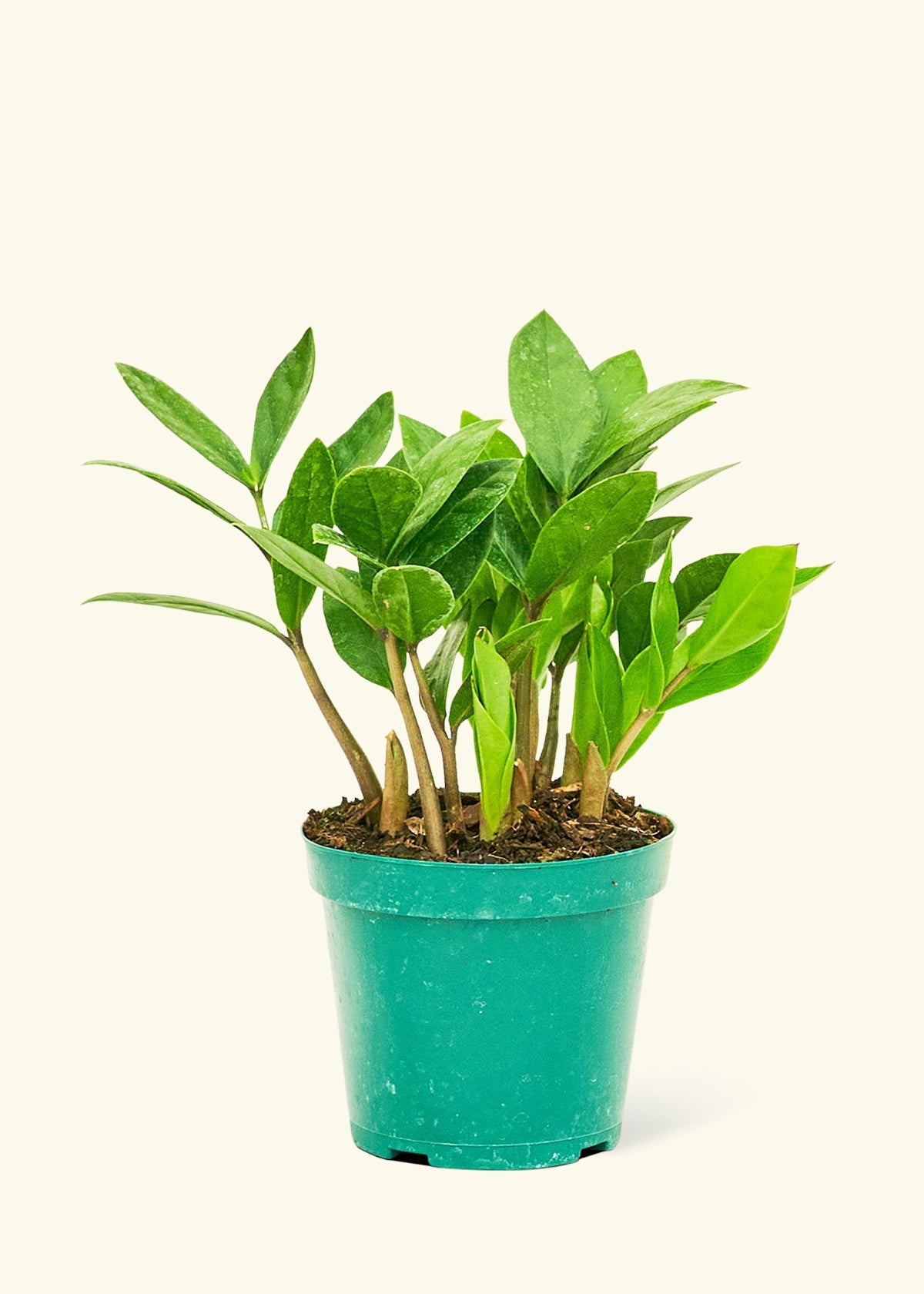
The ZZ plant (Zamioculcas zamiifolia) has glossy, dark green leaves that grow on elegantly arched stems. Native to Eastern Africa, this popular tropical plant thrives outdoors in hardiness zones 9-10.
Available in various sizes, the ZZ plant makes an impressive statement plant, growing to about 2 to 3 feet tall indoors. These resilient plants have a lifespan of over 15-20 years and are exceptionally easy to care for. ZZ plants are mildly toxic to pets because they contain oxalate crystals.
ZZ Plant: Common Names
- Aroid Palm
- Zanzibar Gem
- Zuzu Plant
- Zeezee Plant
- Emerald Palm
- Eternity Plant
ZZ Plant: Benefits
- Has air-purifying benefits
- Ideal for beginners because of their easy care requirements
- Attractive, deep emerald foliage and elegant shape
- One of the best plants for low-light spaces and artificial light
- Mood-lifting tropical vibe
ZZ Plant Care: Growing Tips
One of the toughest and least fussy plants available, the ZZ plant is a must-have if you don’t have much time for plant care. Here are the basic Zamioculcas zamiifolia care tips to keep this emerald beauty thriving:
ZZ Plant: Light Requirements & Temperature
- Light: One of the key ZZ plant benefits is its adaptability to various light conditions. It prefers medium to bright indirect light, but easily tolerates low light, as well.
- Temperature: Indoor temperatures from 65°F to 75°F are best for the ZZ plant. It will grow outdoors, too, as long as the temperatures stay above 50°F.
ZZ Plant: Watering & Humidity
- Watering: The ZZ plant’s roots are thick rhizomes that store water and nutrients. Always let the soil dry between waterings to prevent overwatering and root rot.
- Humidity: The ZZ plant thrives in average indoor humidity and doesn’t require misting.
ZZ Plant: Soil, Fertilizer, and Repotting
- Soil: The potting soil for your Zamioculcas Zamiifolia needs to be well-draining. Add some perlite, sand, or bark to improve aeration.
- Fertilizer: Feed with a balanced fertilizer twice during the growing season in the spring and summer.
- Repotting: ZZ plants grow slowly and are comfortable with being rootbound. Repot once every two or three years into a slightly larger pot.
ZZ Plant: Propagation
The best time for ZZ plant propagation is early spring. Divide a large ZZ plant or take stem or leaf cuttings and propagate them in water or moist soil.
ZZ Plant: Problems and Pruning
ZZ plants are hardy and normally don’t require a lot of upkeep. Yellowing leaves are the result of overwatering or the use of tap water. Trim any broken or wilted stems from the base. You can tie the long stems of a mature ZZ plant together to keep your plant looking neat, or prune the long stems.
ZZ Plant FAQ
How much does a ZZ plant cost?
Our ZZ plants start at $29 for the small size, with medium, large-format, and extra-large floor plants priced by size. Every plant ships with our 30-day guarantee.
Is the ZZ plant safe for cats and dogs?
No. ZZ plants are mildly toxic to pets and people if chewed, because the sap contains calcium oxalate crystals. Keep it out of reach, or choose from our pet-safe plants collection instead.
Can a ZZ plant live in a windowless office?
Yes. The ZZ plant tolerates low light and even fluorescent-only lighting, which is why it is our most recommended desk and office plant. It will grow faster in medium to bright indirect light.
ZZ Plant: Companion Plants & Placement Options
The fabulous shape of the ZZ plant’s leaves resembles leathery palm fronds, contributing to this plant’s tropical charm.
Great to Place on
Many people buy a ZZ plant to use as a statement plant in homes or offices, but these versatile indoor plants can also add texture and tall foliage in plant compositions. A small ZZ plant is perfect for decorating desks, shelves, or coffee tables.
ZZ Plant Grows Well With
Your ravishing Zamioculcas Zamiifolia plant will look amazing with other leafy plants:
- Ficus Audrey: The lovely Ficus Audrey is a distant relation of the popular Fiddle Leaf Fig, but this charming indoor tree is not nearly as finicky.
- Money Tree: The Braided Money Tree is one of the most popular gift plants, believed to bring good luck.
- Snake Plants: Tough and often quite tall, Snake plants are ideal plants for vertical spaces.
Love the look but want drama? The Black ZZ plant (Raven ZZ, Zamioculcas zamiifolia 'Raven') has the same easy care with near-black foliage. Shop the Black ZZ plant here.
Order ZZ Plant for Sale From Hey Rooted Now!




 Care level: No sweat
 Light: Low
 Not pet friendly
 Water: Twice a month


