Ruby Ficus Care Guide
About Ficus Ruby
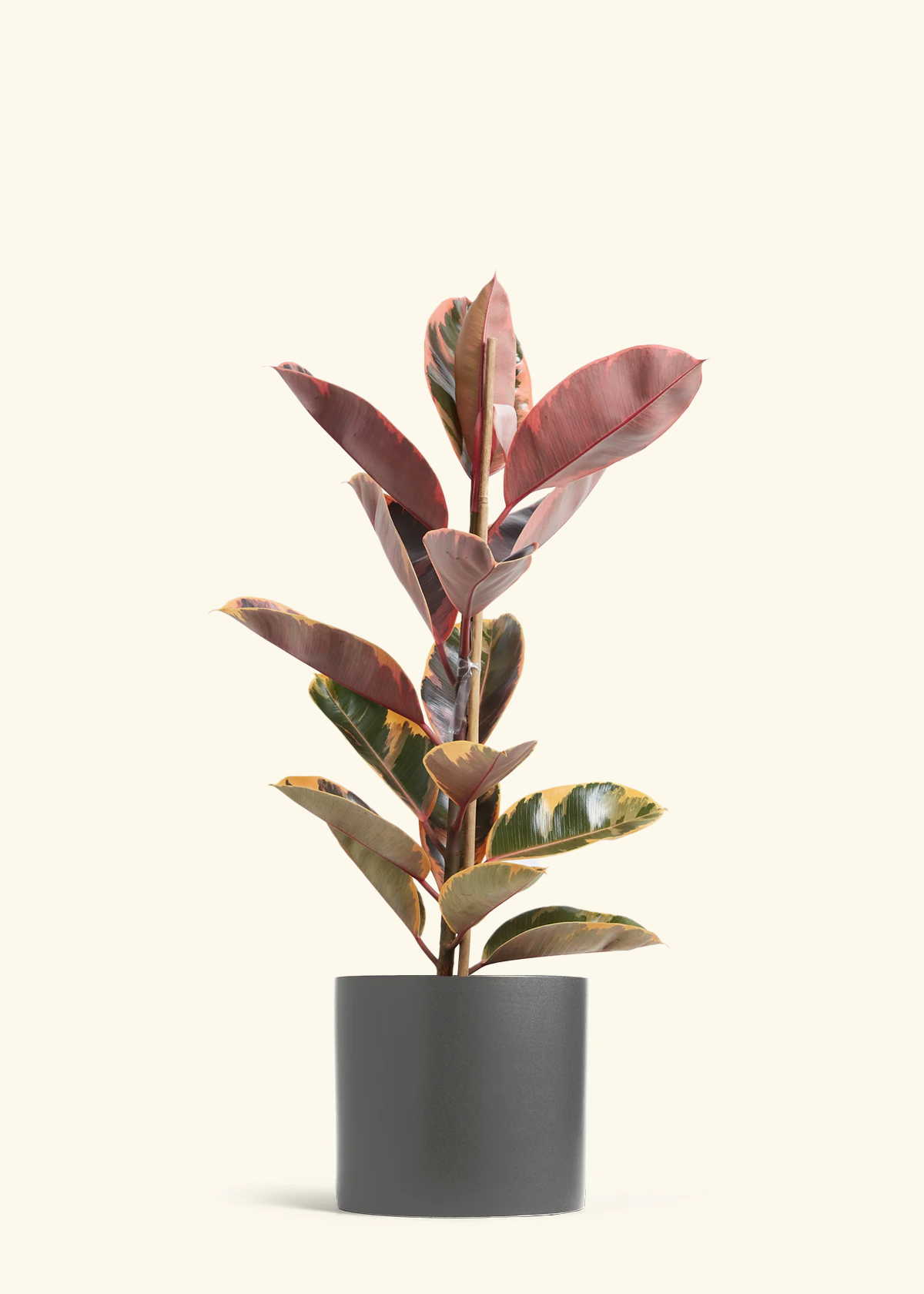
The Ficus Ruby (Ficus elastica Ruby) is a gorgeous indoor tree with creamy, pink, and green variegation on its leaves. This tropical is native to various countries in Southeast Asia (India, Malaysia, and Indonesia), hence it thrives in sub-tropical and tropical climates (zones 10-12).
Ficus Ruby plant care is not hard, as long as you provide the right lighting, humidity, and watering. Keep this beauty in a stable, warm environment to ensure its foliage stays healthy and lush.
This indoor tree comes in several sizes and can grow large (up to 3 m) with the right attention and care. If you have pets at home, however, keep it out of reach, as it can be toxic if ingested.
The Ficus elastica Ruby symbolizes good fortune and abundance, so it’s believed to be a lucky plant.
Consider growing other ficus varieties, such as the much-loved Fiddle Leaf Fig (Ficus lyrata) or the similar-looking Ficus Tineke.
Ficus Elastica: Benefits
- A perfect gift with a symbolic meaning of prosperity
- Ideal indoor tree for beginners
- Makes a great floor plant
- Offers an exotic feel in any room
- A natural air-purifier
Ficus Ruby Care: Growing Tips
Ficus elastica Ruby care is quite easy, so even novice indoor gardeners can enjoy its beauty and gorgeous foliage once they master its growing requirements.
Ruby Rubber Plant: Light Requirements & Temperature
- Light: The Ficus Ruby grows best in bright but indirect light. A few hours of direct sunlight in the morning maintain its pink-and-green variegation.
- Temperature: Temperatures between 65°F and 80°F are ideal for your Ruby Rubber tree.
Ruby Ficus: Watering & Humidity
- Watering: Water the Ficus Ruby when the top few inches of the soil feel dry. Overwatering can lead to root rot and yellowing leaves.
- Humidity: The Ficus elastica Ruby prefers higher humidity (40-60%) but can adapt to regular indoor conditions.
Ruby Rubber Tree: Soil, Fertilizer, and Repotting
- Soil: Use well-draining, nutrient-rich soil, mixed with perlite for good drainage and aeration.
- Fertilizer: For the best Ruby Rubber plant care, feed your ficus monthly with a balanced fertilizer during spring and summer.
- Repotting: Repot your Ruby Rubber tree every 2 years in the spring; use a slightly larger pot.
Ruby Rubber Plant: Propagation
You can propagate your Ficus Ruby from stem cuttings. Whether placing them in water or directly in soil, expect roots to form within a few weeks. Always change the water weekly to prevent rotting. Plant the rooted new rubber plants in small pots with slightly moist, well-draining soil.
Ruby Ficus: Problems and Pruning
Overwatering is the most common issue with this ficus variety. It can result in mushy roots and yellow leaves. Exposure to harsh direct light causes brown leaf tips, so avoid the hot sun in the summer afternoons. Outdoors, partial shade is best for this rubber tree. Pruning should be minimal; trim damaged or aged leaves regularly.
Ficus Ruby: Companion Plants & Placement Options
This architectural statement plant, with striking foliage in pastel colors, will look beautiful on its own or against darker-leaf greenery.
Great to Place on
This beauty adds lush greenery to any home, business, or office space. Create visual interest by placing it in an empty corner, or achieve depth and texture in your arrangement by grouping it with other dark-green plants.
Ruby Rubber Plant Grows Well With
Pair your Ruby Rubber plant with other tropical foliage plants for the ultimate exotic jungle feel:
- Snake Plant Zeylanica: The Snake Plant Zeylanica is a low-maintenance addition to any indoor garden display.
- White Bird of Paradise: The White Bird of Paradise boasts glossy foliage and large white blooms, creating a visual contrast that can’t be ignored.
- Burgundy Rubber Tree: The Burgundy Rubber Tree is the darker and more dramatic cousin of the Ruby Rubber Plant; they will look amazing together.
Get Ficus Ruby for Sale From Hey Rooted Today!


 Care level: No sweat
 Light: High
 Not pet friendly
 Water: Once a week


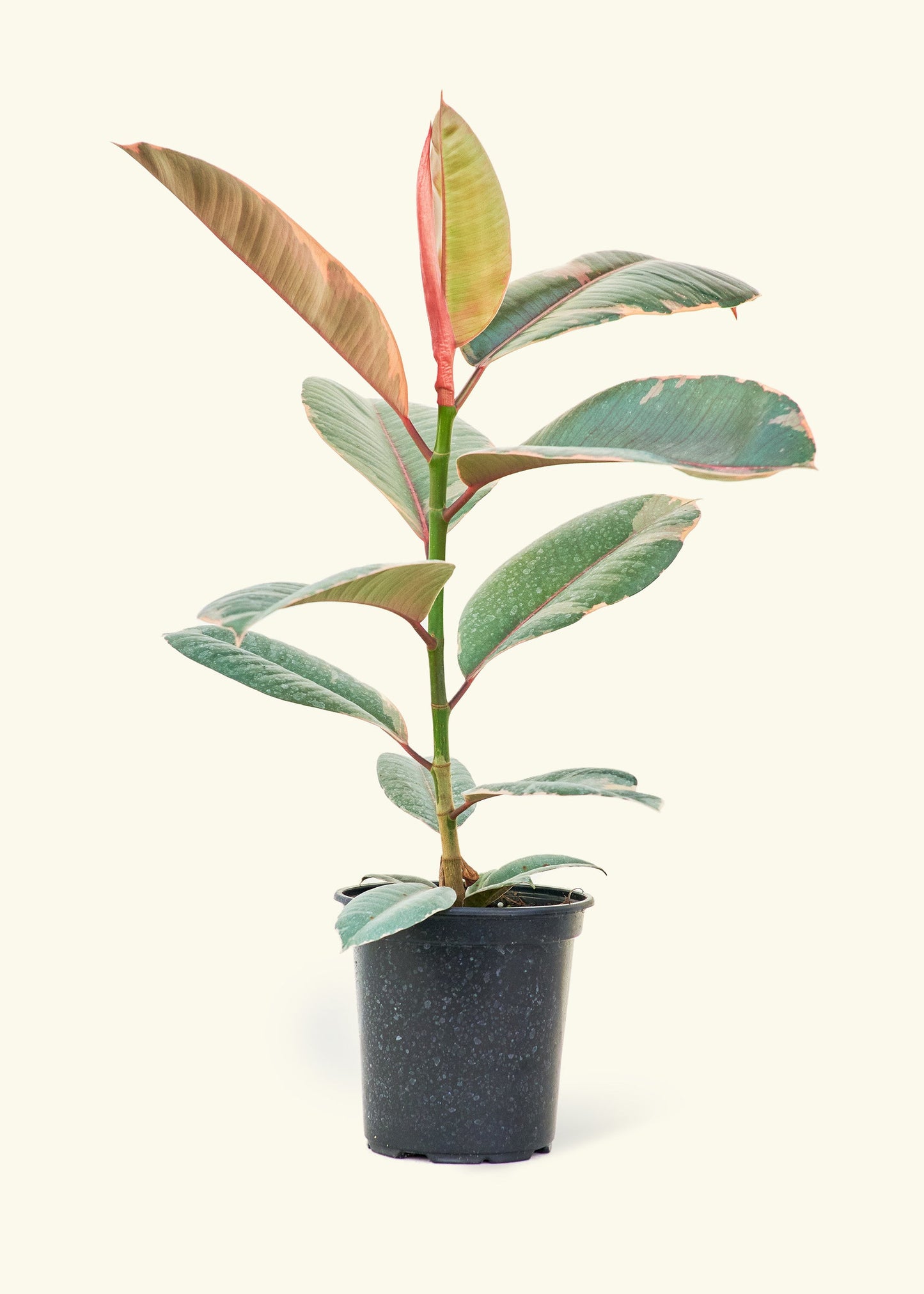
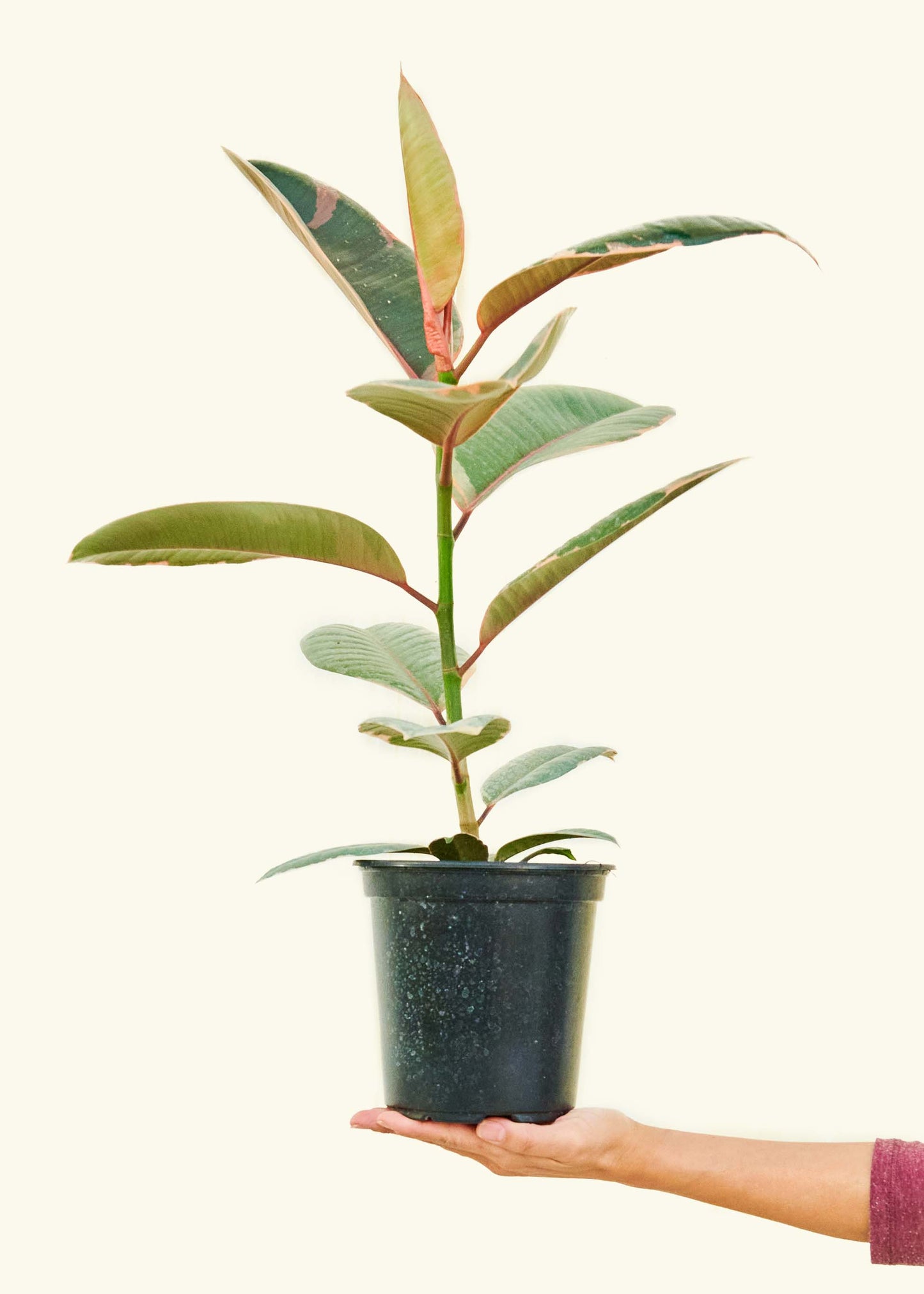
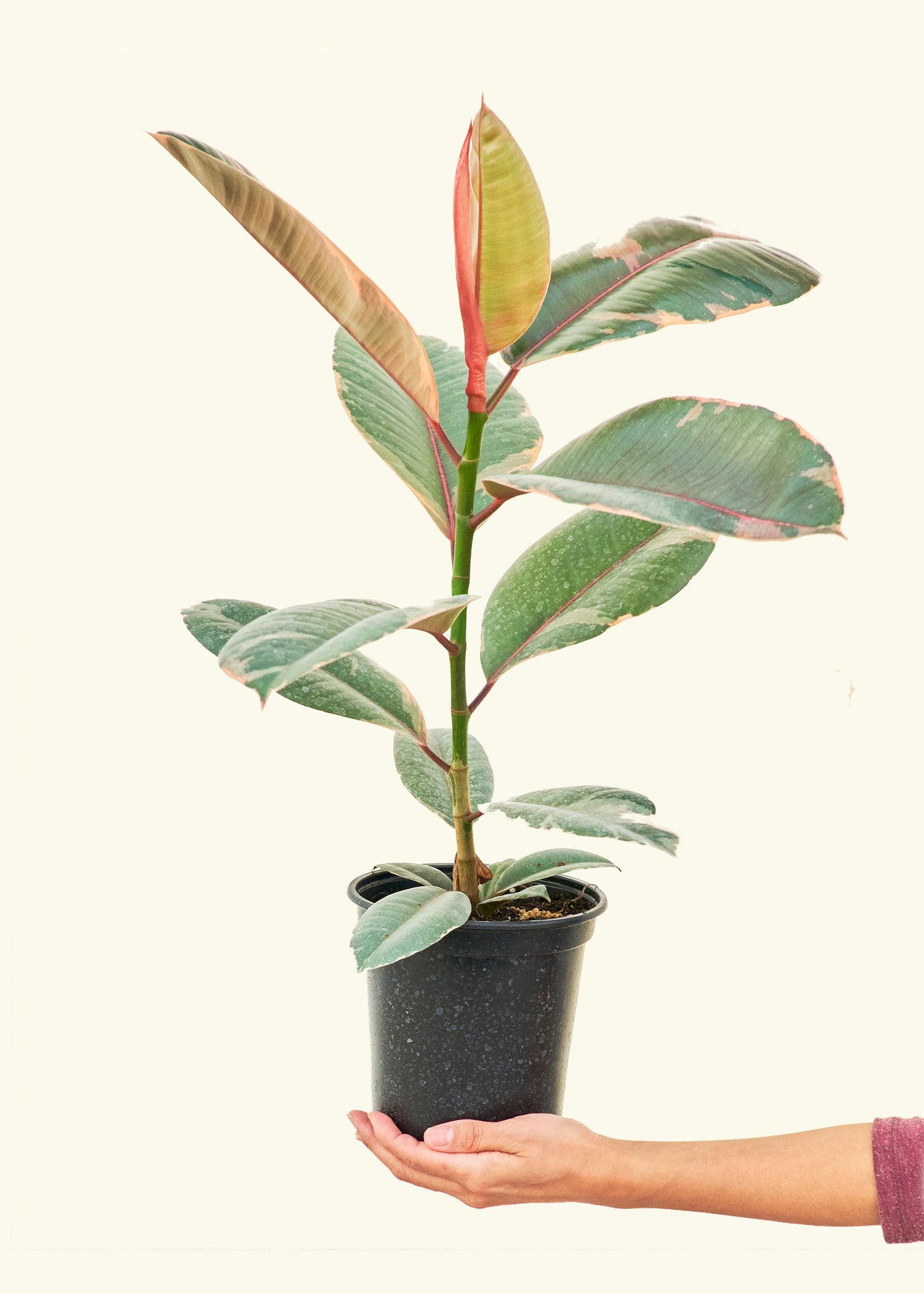




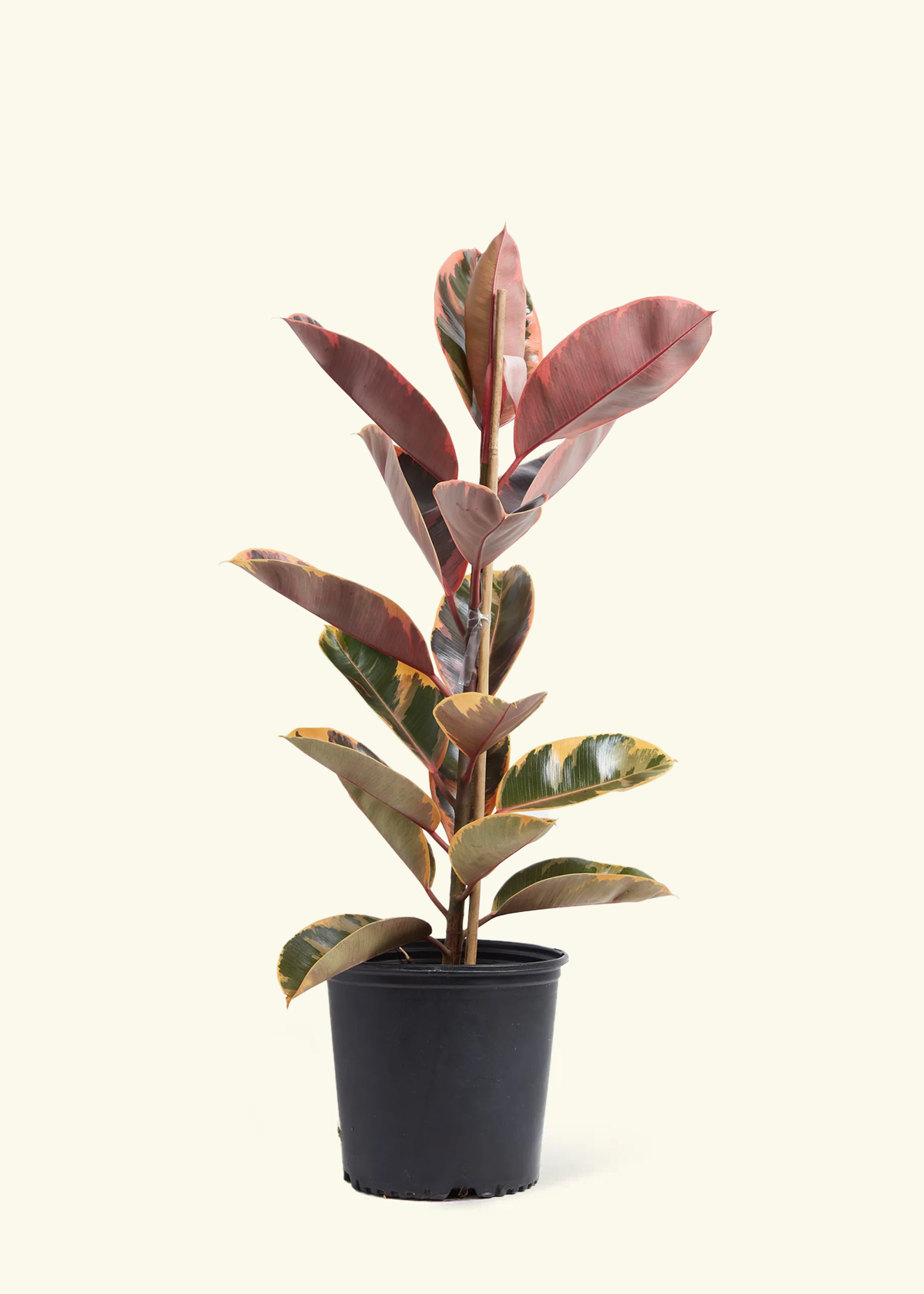
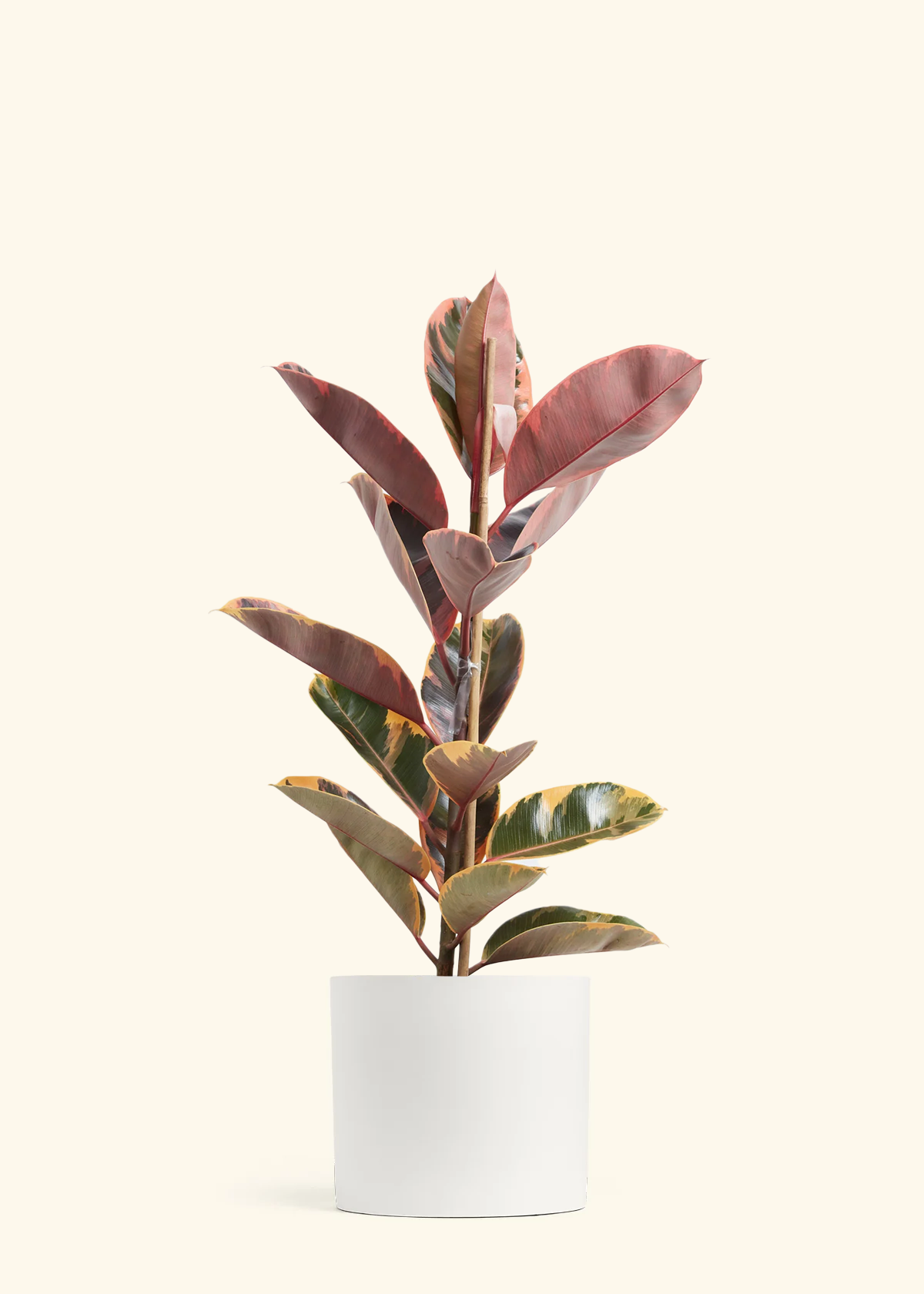
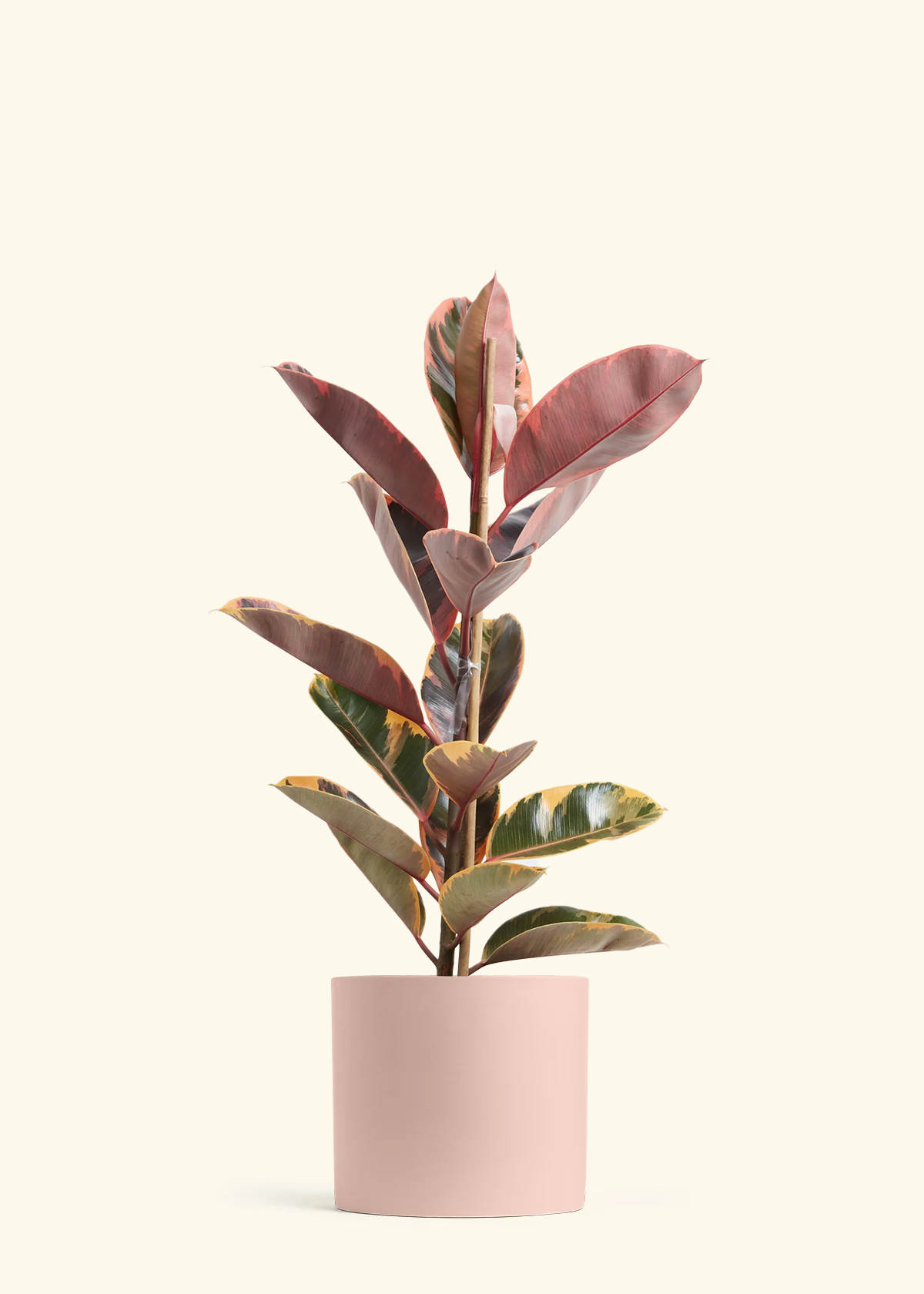

 2" diameter
 4"-7" height