Peace Lily Care Guide
About Peace Lily Plant
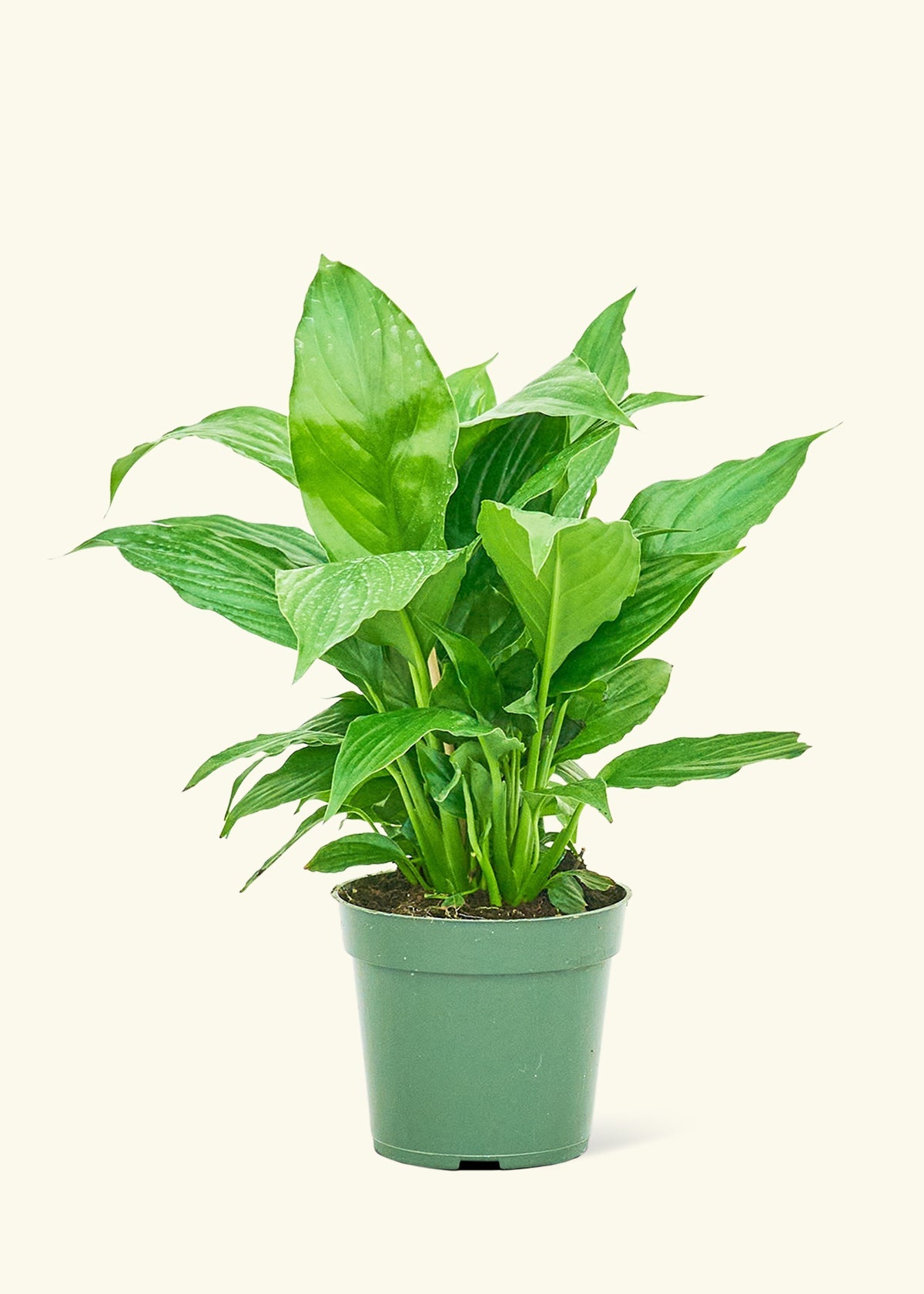
The enchanting Peace Lily (Spathiphyllum wallisii) is a popular tropical plant with luxuriant foliage and snowy white blossoms. Native to the rainforests of Central and South America, it grows best in USDA hardiness zones 10-12, where there is no frost. A remarkably easy-care plant, despite its exotic look, the Peace Lily adds style and elegance to any living space or office environment. Unfortunately, these air-purifying plants are mildly toxic to cats and dogs if ingested. Still, Peace Lilies boast numerous benefits, such as regulating indoor humidity, removing mold spores from the air, and improving sleep, among many others. They also symbolize peace, purity, sympathy, and new beginnings, making them the perfect gift.
If you’re fond of houseplants with multicolored foliage, check out the Variegated Peace Lily with its cream and white leaves.
Peace Lily Plant Care: Growing Tips
Are you considering getting a Peace Lily for sale but wondering if it’s a challenging plant to grow? Peace Lily plants are low-maintenance plants, especially if you understand their needs from the outset. Here are some tips to help you grow these stunning beauties:
Peace Lily: Light Requirements & Temperature
- Light: The Peace Lily, or Spath Lily, prefers medium to bright indirect light. Direct sunlight may scorch the leaves, while low-light conditions may hinder blooming.
- Temperature: Temperatures from 65°F to 85°Fare best for your Peace Lily. Keep it away from cold drafts.
Peace Lily: Watering & Humidity
- Watering: Water your Spathiphyllum regularly, so the soil dries between waterings. Use filtered or distilled water, as chemicals in tap water can cause brown leaf tips.
- Humidity: An indoor Peace Lily requires high humidity to thrive. Mist its foliage, place the pot on a pebble tray, or use a humidifier.
Peace Lily: Soil, Fertilizer, and Repotting
- Soil: Use a well-draining soil for your Peace Lily, adding perlite or bark for aeration.
- Fertilizer: Feed with a balanced, liquid fertilizer once every season. Dilute the fertilizer by half; overfertilizing may result in green blooms.
- Repotting: Repot every two years into a slightly larger pot. Avoid repotting the Peace Lily while it is in flower.
Peace Lily: Propagation
The best way to grow more plants from Peace Lily plants for sale is to divide a mature plant in the spring, planting the new plants in moist, well-draining soil.
Peace Lily Plant: Problems and Pruning
Lightly pruning your Peace Lily in spring will help it to grow lush and healthy. Regularly trim the brown, wilting flowers.
Overwatering will cause yellowing leaves, which can also indicate that your plant is rootbound and needs repotting. Curling leaves show that the humidity is too low. Spider mites may attack a Peace Lily in dry indoor settings.
Peace Lily: Companion Plants & Placement Options
The lovely deep-green foliage and white blooms of the Spathiphyllum Peace Lily make it a popular choice for interior design.
Great to Place on
Place your Peace Lily plant in a location with indirect light. Create a focal point in your interior, display it on shelves or side tables, or use it to add some greenery to your kitchen or bathroom.
Peace Lily Plant Grows Well With
Combine your Spathiphyllum plant with other flowering plants or those with lush foliage:
- Lipstick Plant: The sun-loving and undemanding Lipstick Plant grows graceful, long vines with red flowers shaped like miniature lipstick tubes.
- Black Anthurium: The moody Black Anthurium will provide an elegant contrast to the Peace Lily’s white flowers, creating an exceptional black-and-white composition.
- Braided Money Tree: The lucky Braided Money Tree has a quirky trunk, composed of several interlaced plants.
Order a Peace Lily From Hey Rooted Today!




 Care level: Pretty chill
 Light: Low
 Not pet friendly
 Water: Once a week


